
Leeds Glass Suppliers. Call our team on
Get A Fast Quote
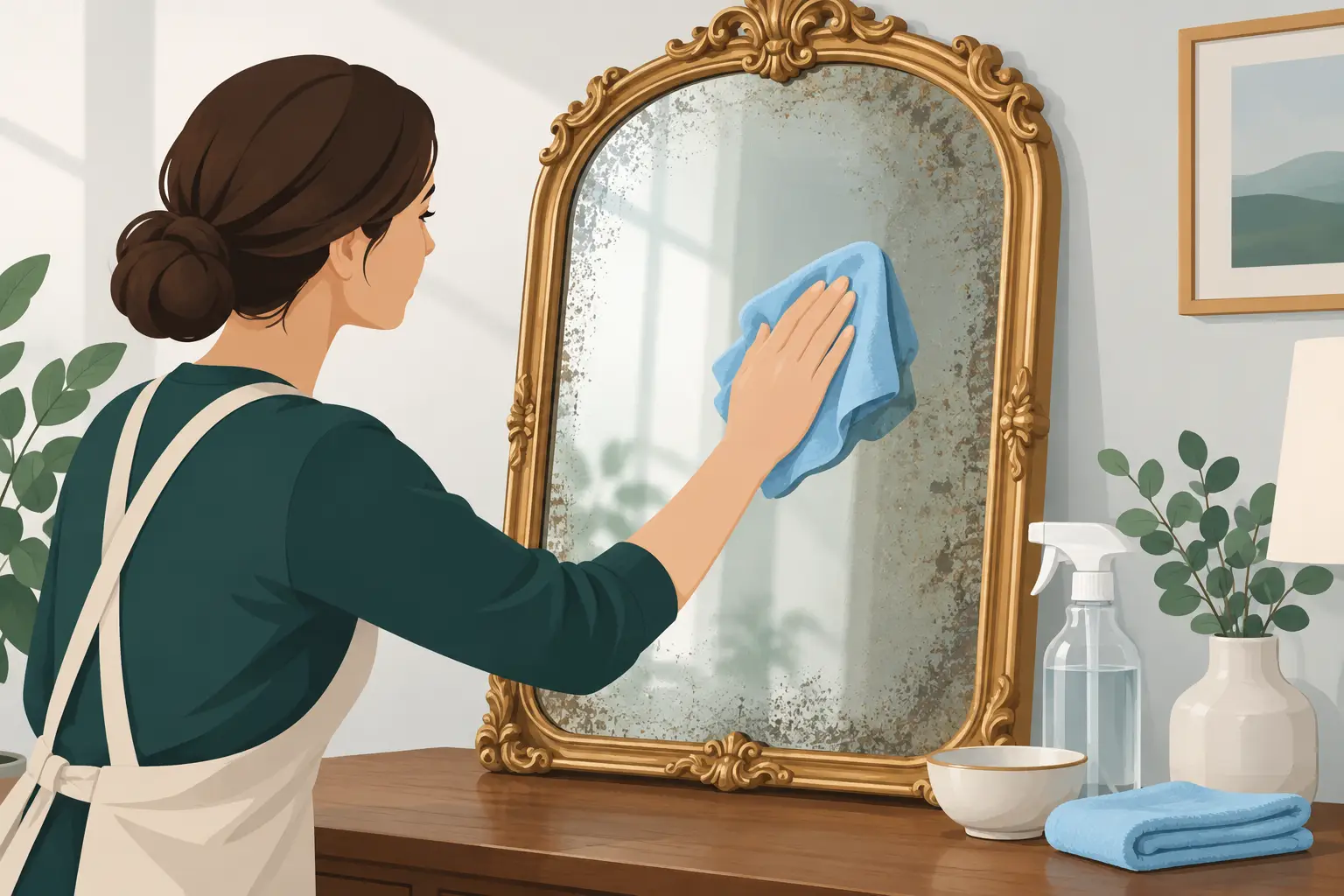
An antique mirror can look beautifully imperfect: softened reflections, darkened edges and tiny marks in the backing are often part of its character. Knowing how to clean antique mirrors means working around those details, not trying to scrub them away. A little moisture in the wrong place can damage the silvered backing permanently, so a gentler approach is nearly always the right one.
Not every aged-looking mirror is an antique. Many modern decorative mirrors are made with intentionally distressed or antiqued glass, while older pieces may have original mercury or silver backing and a timber, plaster or gilded frame. The cleaning method depends on which you have.
Look closely at the glass, particularly around its edges. Black spots, cloudy areas, fine speckling and a faded reflection may be signs of desilvering, where the reflective backing has deteriorated over time. This is not ordinary dirt and cannot be cleaned off. In fact, attempts to remove it with stronger products tend to make the damage worse.
If the mirror is loose in its frame, has lifting backing, water stains behind the glass or extensive flaking at the edges, avoid cleaning it beyond a light dust. It may need advice from a specialist restorer, particularly if it is an inherited or valuable piece.
Keep the kit simple. The safest materials are usually already to hand:
Use plain white cloths where possible. Dyed cloths can transfer colour when damp, especially onto pale or porous frames. Distilled water is preferable because it contains fewer minerals than tap water, reducing the chance of marks on the glass.
Start with the mirror completely dry. Use a soft microfibre cloth to lift surface dust with light, straight strokes. Do not press hard at the edges, where moisture and polish can easily find their way behind the glass.
For carved or detailed frames, use a soft brush first. Work gently along grooves, mouldings and corners, allowing the bristles to lift dust rather than forcing a cloth into delicate areas. If there is old gilding, painted decoration or a chalky finish, dry dusting is often all it needs.
Once loose dust has been removed, assess the glass. If it has only light fingerprints or everyday smears, dampen one corner of a clean cloth with distilled water. The cloth should feel barely moist, never wet enough to drip. Wipe a small central area with a light touch, then immediately dry it with the second cloth.
Continue in small sections. Always apply moisture to the cloth, not directly to the mirror. Spraying glass cleaner or water onto an antique mirror is risky because liquid can run down the face of the glass and settle along the lower edge or behind the frame.
For a stubborn fingerprint, hold the damp cloth over the mark for a moment, then wipe gently and dry straight away. Avoid circular scrubbing. It can leave smears, catch grit against the surface and tempt you to use too much pressure.
The outer 10 to 15 mm of an antique mirror is the area most likely to have fragile backing. Clean towards the edge but stop short if the silvering is visibly worn, peeling or blotchy. A slightly dusty edge is better than a newly enlarged patch of desilvering.
If you need to clean a narrow line near the frame, wrap a small amount of dry or barely damp cloth around a cotton bud. Work slowly and keep the bud moving. Never let moisture sit in a corner.
Modern glass cleaners are designed for modern mirrors and windows. They often contain alcohol, ammonia, fragrance or other additives that may be harmless on a sealed bathroom mirror but unsuitable for old glass and vulnerable backing.
Do not use vinegar, washing-up liquid, bleach, cream cleaners or abrasive powders. Vinegar is often promoted as a household cleaning solution, but its acidity makes it a poor choice for an antique mirror. Similarly, do not use newspaper, kitchen roll with a rough texture or scouring pads. These can leave fibres, scratch the surface or create unnecessary friction.
Polishing products deserve caution too. A mirror is not the same as a piece of polished furniture or metal. If the glass looks cloudy after dusting and careful cleaning, the cause may be ageing within the mirror rather than something on its surface. No polish will restore lost silvering.
Frames need a separate approach. A simple sealed wood frame may tolerate a lightly damp cloth, followed immediately by drying. However, antique frames are often finished with wax, shellac, paint, gilt, plaster ornament or veneers that react badly to water and household cleaners.
When in doubt, dust only. Test any cleaning method on a concealed area first and use the smallest possible amount of product. Do not apply furniture polish close to the glass, as it can creep beneath the frame edge and stain the backing. It can also create a build-up that attracts more dust over time.
A gilded frame with flaking areas should be handled particularly carefully. Do not rub loose sections back into place or brush aggressively around them. Professional conservation is the sensible route where the finish is lifting, cracked or historically significant.
A mirror with black patches, cloudy bloom or brown marks may be suffering from deterioration behind the glass. This can happen through age, damp conditions, poor ventilation or previous exposure to cleaning products. It is often most visible around the perimeter, but it may spread across the reflected surface.
There is a trade-off here. Original ageing can add depth and authenticity to an antique piece, while a badly deteriorated mirror may no longer be practical in a bedroom, hallway or bathroom. If the frame is worth preserving but the reflection is poor, a specialist can sometimes fit replacement mirror glass while retaining the original frame.
For a period look in a new interior, newly made antique mirror glass may be a better fit than an irreplaceable old mirror. It offers the character of a foxed or aged finish with the practicality of modern manufacture, and can be made to suit a particular wall, alcove, wardrobe door or furniture piece.
Where an antique mirror hangs matters as much as how it is cleaned. Avoid positioning it in a damp bathroom unless there is effective extraction and the mirror is well away from direct splashes. Do not place it above a radiator, where repeated heat changes can affect both the frame and backing.
In kitchens, keep mirrors clear of hobs and areas exposed to steam or grease. A little ventilation after cooking or showering is worthwhile, particularly in older homes where condensation can linger.
Dusting every few weeks is normally enough. Save damp cleaning for when the glass genuinely needs it. The less moisture and product an antique mirror encounters over its lifetime, the better its chances of retaining the surface that makes it distinctive.
If you are unsure whether marks are dirt, ageing or backing damage, pause before reaching for a cleaner. A clear photograph and practical advice can prevent a small cleaning job becoming a permanent alteration. For homeowners planning a replacement or a made-to-measure antiqued mirror, Yorkshire Glass can help match the right glass to the room while keeping the original character in mind.