
Leeds Glass Suppliers. Call our team on
Get A Fast Quote
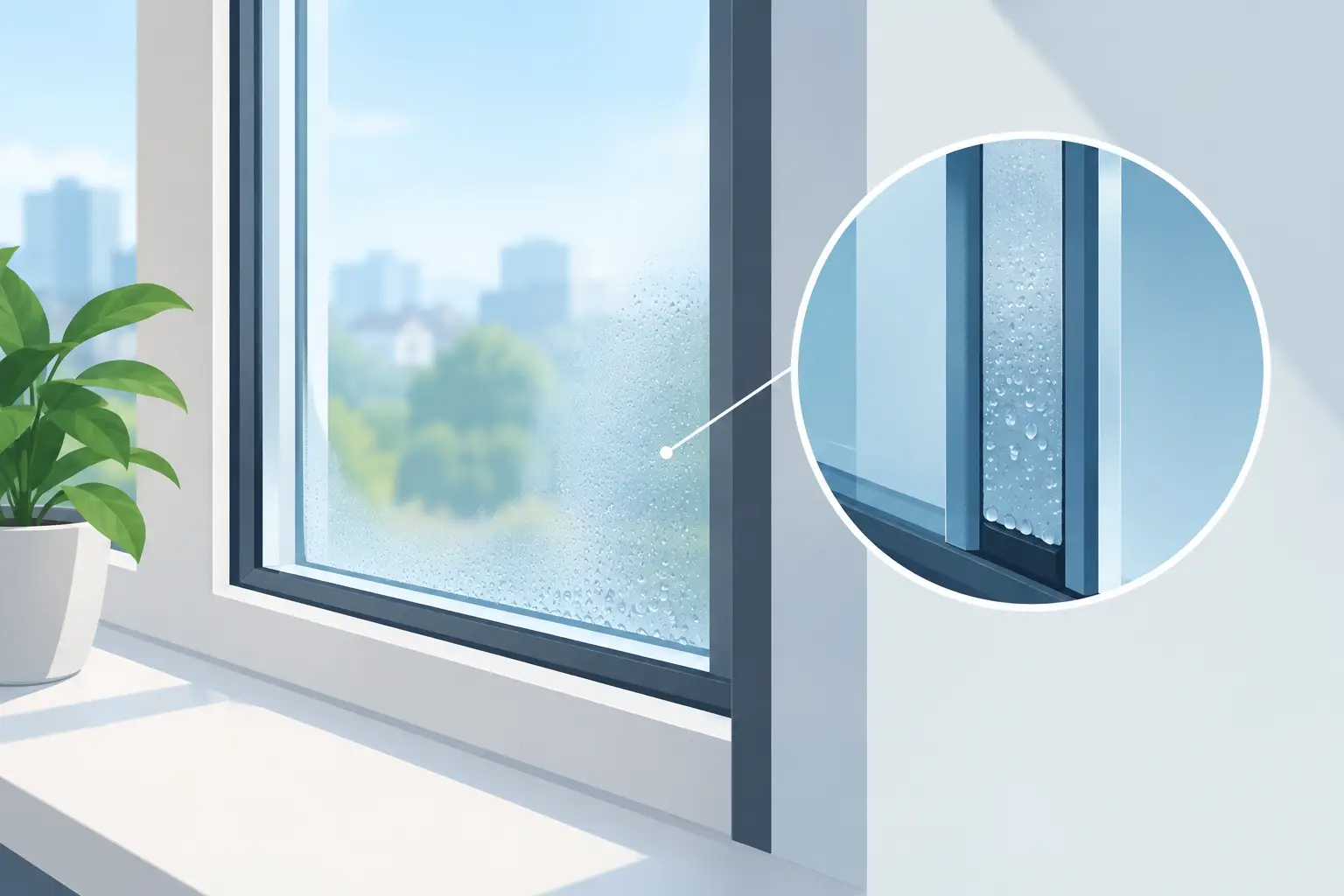
A misty patch that cannot be wiped away from either side of a window is frustrating for a simple reason: it is not dirt, and it is not a cleaning problem. Condensation between panes usually means the sealed double glazed unit has failed. The good news is that, in many cases, the frame does not need replacing. A correctly measured replacement glass unit can often restore the view, insulation and appearance without changing the whole window.
For homeowners, landlords and trade customers across Yorkshire, the right next step depends on the condition of the frame, the type of glazing and the age of the installation. Here is what is happening inside the glass and how to approach a lasting repair.
A double glazed unit is made from two panes of glass separated by a spacer bar around the edge. That gap is sealed and usually filled with dry air or an insulating gas, such as argon. A drying material within the spacer helps absorb any small amount of moisture left during manufacture.
When the perimeter seal breaks down, outside air and moisture can enter the cavity. Over time, the drying material becomes saturated. Water vapour then condenses on the internal faces of the glass, creating misting, droplets or a cloudy appearance that sits permanently within the unit.
Seals can fail for several reasons. Age is the most common, particularly with older units that have been exposed to years of changing temperatures. Strong sunlight, repeated expansion and contraction, poor original manufacture, damaged edges and movement in the frame can all shorten a unit's life. Windows on exposed elevations may face harsher conditions than those in a sheltered part of the house.
It is not necessarily a sign that somebody has done anything wrong. Even well-fitted double glazing has a finite lifespan, and the seal is the component doing the hardest work.
Not every steamed-up window has failed glazing. Condensation on the room-facing surface is generally caused by warm, moist household air meeting cold glass. It is common after cooking, showering, drying clothes indoors or overnight in bedrooms. Better ventilation, steadier heating and reducing excess moisture can make a real difference.
Condensation on the outside face is different again. It can appear on efficient modern glazing during cool, clear mornings, when the outer pane becomes colder than the surrounding air. While it may seem odd, external condensation can indicate that the unit is retaining heat inside the home effectively.
Moisture between the panes is the clear warning sign. Try cleaning both accessible faces of the glass. If the marks remain trapped in the centre, or if you can see droplets and haze behind the surface, the sealed unit has failed.
The visual problem is usually what prompts action. A cloudy window spoils the view, makes a room feel less cared for and can be especially noticeable in patio doors, conservatories and large glazed areas. But appearance is only part of the issue.
Once the seal has failed, the unit will no longer perform as intended. The insulating gap is compromised, meaning more heat can be lost through the glass than through a sound unit of the same specification. In practical terms, the inside pane may feel colder in winter and the room may be less comfortable near the window.
The degree of performance loss varies. A small amount of misting does not automatically mean a dramatic change to energy bills, particularly in a modest window. However, several failed units around a property can add up. If you are updating a kitchen, bathroom or living space, replacing failed glazing is a sensible opportunity to consider improved thermal glass specifications.
Persistent moisture can also leave mineral deposits or staining within the cavity. These cannot be cleaned away because the affected surface is sealed inside the unit. Leaving the problem for a while is unlikely to create an immediate emergency, but it will not repair itself and the unit's condition will generally worsen.
Often, yes. If the existing uPVC, timber or aluminium frame is structurally sound, a replacement double glazed unit may be the most practical solution. The old sealed unit is removed and a new made-to-measure unit is fitted into the existing frame, using the appropriate packers, beads and seals.
This approach is usually less disruptive and less costly than a full window replacement. It also makes particular sense where the windows match the character of the property, where only one or two units have failed, or where the frames still open, lock and drain properly.
There are limits. A replacement glass unit will not correct rotting timber, badly warped frames, failed hinges, damaged locking mechanisms or significant draughts around the opening. If the frame itself is near the end of its life, a complete window replacement may offer better value over the longer term.
For trade projects, accurate specification matters as much as the visible size. The new unit must match the required overall thickness, glass type, spacer configuration and safety requirements. A unit that is even a few millimetres wrong may not sit correctly, and incorrect glazing can affect drainage, security and performance.
Some locations need toughened safety glass rather than standard annealed glass. This commonly includes glass in or near doors, low-level glazing and areas around baths or showers. If a failed unit is being replaced, it is worth checking whether the original glass meets current safety expectations for that location.
Toughened glass is designed to break into small, less hazardous fragments if severely damaged. It is a practical consideration for family homes, busy entrances and bathroom spaces, not simply an optional upgrade.
A like-for-like unit is suitable when you simply want to restore a window to its previous appearance and performance. Yet replacement is also a chance to improve the specification where the frame can accommodate it.
Low-emissivity glass can help retain warmth indoors, while an argon-filled cavity may improve thermal efficiency. Obscure glass gives privacy in bathrooms, stairwells and overlooked rooms. Laminated glass can provide added security or noise reduction in some settings. For south-facing rooms or large glazed doors, solar-control options may help reduce excessive heat and glare, although the best choice depends on the room and how it is used.
Spacer bars also affect the finished look. Warm-edge spacers can improve thermal performance at the perimeter of the unit and are available in different colours, allowing a neater match with the frame. Where appearance matters, details such as Georgian bars, lead designs, decorative glass and matching sightlines should be discussed before manufacture.
There is a trade-off with every upgrade. A higher-performing unit may cost more, and some older frames cannot take a thicker or heavier specification. The aim is not to choose the most complicated glass available. It is to choose a unit that fits accurately, meets the need and works properly with the existing frame.
The most reliable starting point is a proper assessment and measurement. The visible glass size alone is not enough. The overall sealed-unit thickness, cavity, edge clearance and type of glazing bead all need consideration. For non-standard windows, shaped units, coloured glass, roof glazing or doors, the details become even more important.
A supplier that manufactures to order can produce the required size and specification rather than forcing a standard unit to fit. At Yorkshire Glass, sealed units can be made in Leeds for replacement work and bespoke projects, with practical advice available where the glazing is unusual or the specification is unclear.
Before ordering, check whether there is a warranty on the original windows, especially if they were installed relatively recently. Take photographs of the affected glazing and frame, and note whether the misting is constant or only visible in particular weather. This helps identify the problem before anyone removes the unit.
Do not be tempted by drilled-hole or drying treatments advertised as a permanent cure. These may reduce visible moisture temporarily, but they do not restore the original sealed cavity, insulating gas or factory seal. A new sealed unit is generally the dependable repair.
You cannot stop every seal from ageing, but correct manufacture and fitting give a replacement unit the best chance of a long service life. The glass should be manufactured accurately, handled carefully and installed with suitable glazing packers so its weight is properly supported. Drainage paths in the frame must remain clear, particularly in bottom-hung or outward-opening windows.
Avoid harsh scraping around glass edges or forcing beads back into place. If you notice cracked glass, loose beading, frame movement or water sitting within the frame, deal with it before it affects the replacement unit. For timber frames, keeping paintwork and seals maintained helps prevent moisture reaching areas where it should not be.
A clear window changes more than the view. It makes a room feel brighter, restores the finish of the property and helps the glazing do the job it was installed to do. If the mist is trapped inside the glass, getting the unit measured properly is the straightforward first move.