
Leeds Glass Suppliers. Call our team on
Get A Fast Quote
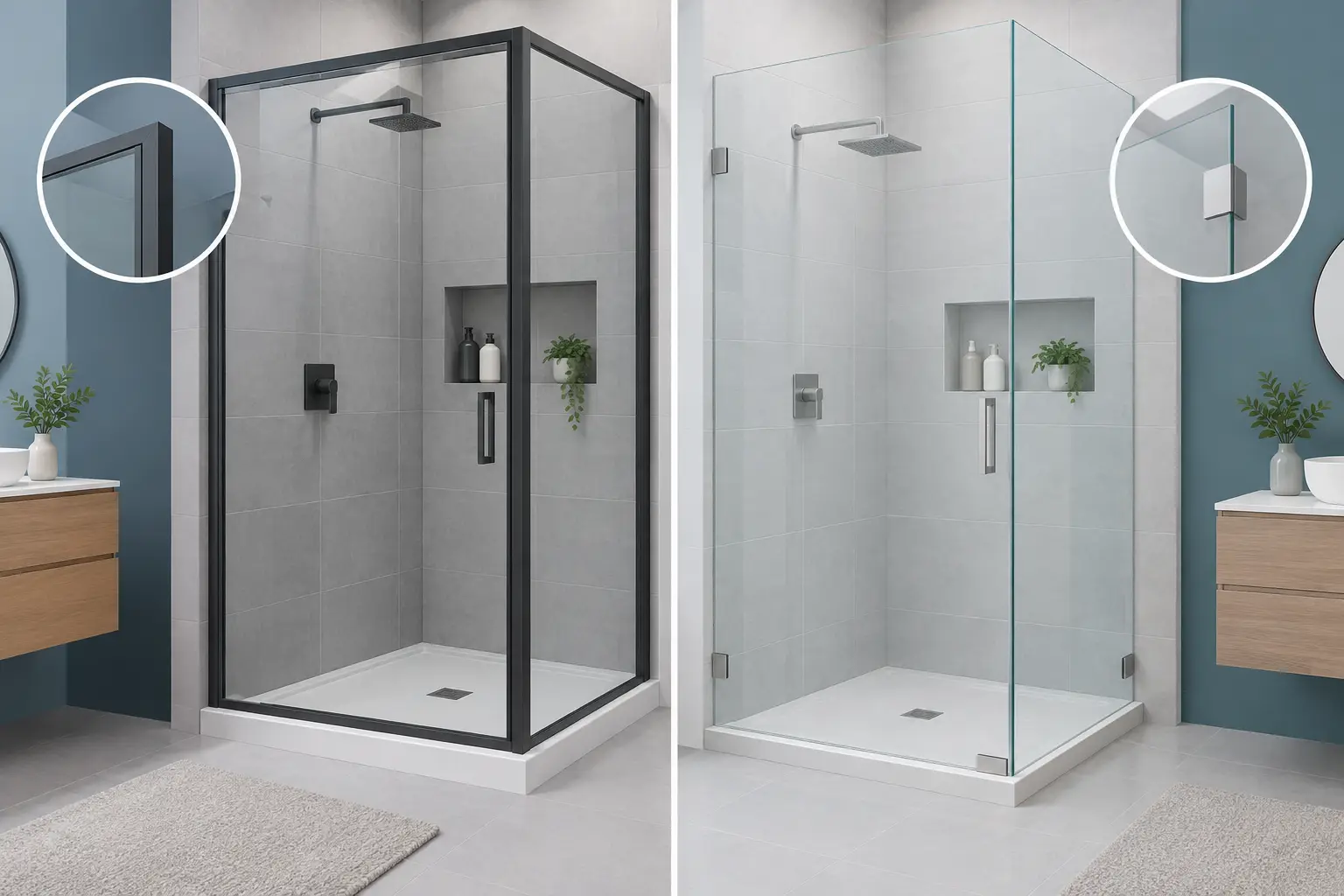
A shower screen can make a compact en suite feel open or turn a newly tiled family bathroom into a space that feels properly finished. Yet the choice is rarely just about appearance. When comparing framed versus frameless shower screens, the wall condition, tray size, bathroom layout, cleaning routine and budget all deserve as much attention as the look of the glass.
A framed screen is often the sensible answer where walls are slightly out of true or a practical, well-contained shower area is the priority. A frameless screen makes more of feature tiles, stone finishes and carefully planned bathrooms, but it relies on accurate measuring and suitable fixing points. Neither is automatically better. The right choice is the one that suits your room and will still work well years after installation.
A framed shower screen has metal channels or a visible perimeter frame around the glass. The frame commonly provides adjustment during fitting, helps create a close seal and supports sliding or pivoting door systems. It is available in a range of finishes, although chrome, black and brushed brass are popular choices for modern bathrooms.
A frameless shower screen uses toughened safety glass with minimal hardware. Instead of a full frame, the glass is held by carefully positioned wall brackets, hinges, clamps and, where needed, a stabilising bar. The edges of the glass remain visible, giving the screen its cleaner, lighter appearance.
There is also a middle ground. Semi-frameless designs retain a slim channel or some framed components while reducing the amount of visible metal. For bathrooms with imperfect walls, this can offer much of the frameless look with a little more fitting tolerance.
Frameless glass is particularly effective when you want the shower area to feel less enclosed. With fewer visual lines, light travels through the room and the eye is drawn to the tiles, fittings and overall layout rather than a frame. This is useful in smaller bathrooms, but it works equally well in larger rooms where a walk-in shower is intended to be a focal point.
A fixed frameless panel can create a calm, open wet-room-style feel, especially alongside large-format tiles or a low-profile shower tray. Clear glass is the usual choice, although obscured, tinted or patterned options may suit bathrooms where privacy is needed.
Framed screens have a more defined look. That does not make them dated. A slim black frame can add structure to an industrial-style bathroom, while brushed metal can tie in with taps, handles and towel rails. Where the room already has strong lines, such as panelled walls or geometric tiles, a frame may be a deliberate part of the design rather than something to hide.
The key question is whether you want the shower screen to disappear visually or contribute to the room’s character.
Many homeowners choose frameless screens because there are fewer channels and corners for soap residue and limescale to gather. A simple wipe with a squeegee after showering, followed by regular cleaning with a non-abrasive product, keeps the glass looking its best. Good ventilation matters too, particularly in busy family bathrooms.
Framed screens need a little more attention around the tracks, seals and lower channels. These areas can collect water, shampoo residue and dust. They are still straightforward to maintain, but cleaning takes more care than it does on a plain fixed glass panel.
That said, frameless is not maintenance-free. Hinges, seals and brackets should be checked occasionally, and hard-water marks will show on any clear glass if they are left to build up. If the bathroom has very hard water and cleaning is likely to be a low priority, choose a layout that is easy to reach on both sides rather than selecting a screen purely for its appearance.
The price difference comes down to materials, fabrication and installation. Framed shower screens can use thinner glass because the frame contributes to the overall support. They are often supplied in standard sizes and the adjustment available in the channels can make fitting simpler.
Frameless screens generally require thicker toughened safety glass, often 8mm or 10mm depending on the design. Every edge needs careful finishing, and holes or cut-outs for hinges and brackets must be made before the glass is toughened. Once toughened, glass cannot be cut, drilled or altered, so accurate survey work is essential.
Hardware also has a bearing on cost. Quality hinges and brackets need to support substantial glass safely while standing up to moisture and daily use. A simple fixed frameless panel may be cost-effective, but a bespoke hinged door with angled panels, notches around a ledge or a non-standard opening will require more detailed manufacture and fitting.
It is worth comparing like for like. A low initial price is not helpful if the screen does not fit the tray correctly, needs extra packing against uneven walls or leaves an awkward gap for water to escape.
Bathrooms are rarely perfectly square. Walls can lean slightly, tiled surfaces may vary in depth and shower trays are not always positioned exactly as drawings suggest. These small differences are one reason made-to-measure glass can be a better option than trying to make a standard screen fit.
Framed systems are more forgiving because the wall channels offer adjustment. They can be a good practical choice for an existing bathroom where the walls have already been tiled and there is limited scope for correction.
Frameless systems have tighter tolerances. The wall must be capable of supporting the fittings, and the glass needs to be measured around the finished tiles, tray and any ceiling slopes, boxed-in pipework or niches. For a hinged door, there must also be enough clear space for the door to open safely without hitting a basin, radiator or toilet.
A professional site measure removes guesswork. It also provides the chance to discuss details that affect how the screen performs, including the direction of the fall on the shower tray, where water will run, the position of the shower head and whether an additional return panel or seal is needed.
Both framed and frameless shower screens should use toughened safety glass suitable for the application. Toughened glass is designed to be considerably stronger than ordinary glass and, if it breaks, it fractures into small granular pieces rather than dangerous sharp shards.
A frameless screen is not less safe because it has less metal around it. Its safety depends on correct glass thickness, appropriate fittings, sound walls and proper installation. Large panels may need a stabilising bar, while doors need hinges selected for the panel weight and opening width.
Framed screens can be especially useful for sliding doors, quadrant enclosures and bath screens where a fully sealed enclosure is needed. Frameless glass is often best suited to fixed walk-in panels, hinged doors and layouts where minimal detailing is part of the brief.
If children, older relatives or mobility needs shape the bathroom design, think beyond the screen itself. A wide opening, level-access tray and easy-to-grip handle may matter more than whether the glass has a frame.
Choose a framed screen if you want a dependable, budget-conscious option with more adjustment for uneven walls. It is also a strong choice where you need sliding doors, a fully enclosed shower or a defined metal finish that matches the rest of the room.
Choose a frameless screen if your priority is a clean, contemporary look, a more open feel and glass tailored precisely to the finished space. It is particularly suited to walk-in showers, statement tilework and bathrooms where every detail has been planned.
For many projects, semi-frameless is the practical compromise. It can reduce the visual weight of a full frame while allowing for useful adjustment during fitting.
The best time to make the decision is before tiling is complete and before fittings are ordered. Bring your room dimensions, photographs and ideas into the conversation early. At Yorkshire Glass, made-to-measure screens are manufactured in Leeds, so unusual openings, angled walls and individually specified glass can be considered properly rather than treated as an afterthought.
A shower screen should feel easy to use, simple to clean and right for the room every morning. Start with the layout you need, then choose the level of framing that supports it.