
Leeds Glass Suppliers. Call our team on
Get A Fast Quote
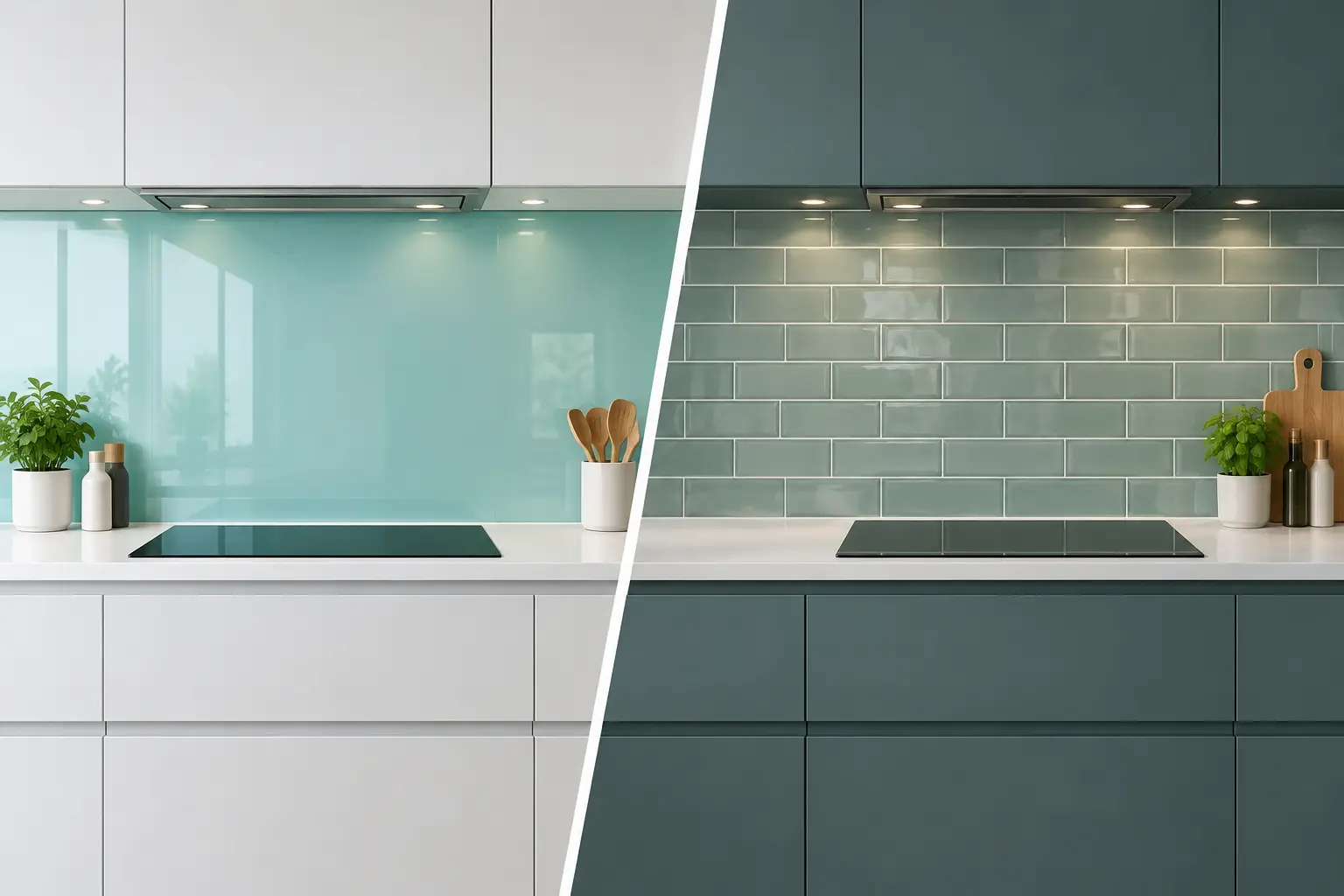
A splashback is one of those kitchen choices that looks straightforward until you begin comparing samples. The difference between glass versus tiled splashbacks is not simply modern versus traditional. It affects how long cleaning takes, how the room handles hard daily use, where your budget goes and whether the finish works with the units, worktop and lighting you have chosen.
For some kitchens, tiles are exactly right. For others, a made-to-measure glass splashback gives a cleaner, more practical result. The best choice depends on the look you want, the condition of the wall, the number of sockets and cut-outs involved, and how you use the space.
The most noticeable practical difference is the surface itself. A glass splashback is a single smooth panel, usually made from toughened safety glass for use behind a hob. There are no grout lines to scrub, no joins across a large run of wall and fewer places for cooking residue to settle. For busy family kitchens, or anyone who would rather wipe down a surface than spend time cleaning grout, that is a real advantage.
Tiles have more texture and detail. Even with a good-quality grout and careful sealing, the joints need regular attention. Grease can build up around a cooker, while pale grout may gradually discolour. This does not make tiles an unsuitable choice, but it does mean they need more maintenance if you want them to keep looking fresh.
Glass is particularly easy to live with behind a range cooker or hob. A soft cloth and suitable glass cleaner are generally enough for everyday marks. Avoid abrasive pads and harsh products, as these can damage surrounding finishes or leave a dull appearance over time.
Glass creates a clean, uninterrupted finish. Coloured glass can be matched to a favourite paint shade, picked to complement cabinetry or used as a strong contrast against pale units. It also reflects light, which can make a smaller or darker kitchen feel brighter. A light-coloured worktop and a crisp white, soft grey or warm neutral glass panel can create a calm, contemporary look without making the room feel clinical.
That does not mean glass has to be plain. A bespoke panel can be specified in an extensive range of colours and can be shaped around cupboards, extractor hoods and awkward wall features. It can also sit beautifully alongside stone, timber, painted cabinetry and patterned flooring because the splashback gives the eye a quieter surface between them.
Tiles offer a different kind of character. They are often the better choice if you want a handcrafted, period or decorative feel. Metro tiles, handmade-effect ceramics, encaustic-style patterns and textured finishes can all bring depth to a kitchen. The tile layout matters as much as the tile itself: brick bond, vertical stack, herringbone and larger-format arrangements each change the overall effect.
The trade-off is visual busyness. In a kitchen with a heavily veined worktop, bold cupboard colour or patterned floor, tiled splashbacks can make the scheme feel crowded. A single glass panel often gives those other materials room to stand out.
Neither option should be chosen without thinking about the wall behind it. Tiles can be useful where walls are uneven, as adhesive and grout allow some adjustment. They also work well for smaller areas or when you want to continue a tiled finish around a whole room.
Glass needs accurate measuring because every panel is made to fit the space. That precision is one of its strengths. A correctly measured glass splashback can run neatly from worktop to cupboard, fit around socket cut-outs and follow the line of a chimney breast or angled return. But glass cannot simply be trimmed on site once it has been toughened, so measurements, templates and cut-out positions must be checked carefully before manufacture.
For walls with several sockets, switches or unusual shapes, a bespoke approach is worth considering. A team that handles measuring and fabrication can identify potential issues early, such as a socket sitting very close to a worktop or an out-of-level cupboard creating a narrow gap. This is where locally made glass can be particularly helpful: the panel is not being selected from a standard stock size and forced to fit.
Tiles may be easier to alter during installation, but they have their own fitting challenges. A poor layout can leave thin tile cuts at the end of a run, while badly spaced grout lines can draw attention to sockets and corners. A skilled tiler will plan the setting-out before adhesive is applied, rather than starting at one end and hoping the final cuts work out.
This is not an area for compromise. A glass splashback fitted behind a gas hob should be made from toughened safety glass. Toughened glass is designed to withstand much greater thermal stress than ordinary glass and, if it breaks, it fractures into small granular pieces rather than dangerous sharp shards.
The location of the hob, the required clearance from flames and the appliance manufacturer's instructions all matter. A panel behind an induction or electric hob faces different demands from one behind a gas range cooker. Your installer or glass supplier should discuss this before the glass is specified, not after the kitchen has been fitted.
Tiles are inherently heat resistant, which is one reason they have been used around cookers for generations. However, the adhesive, grout and wall preparation still need to be suitable for the area. Whichever material you choose, follow the hob manufacturer's guidance on clearances and installation.
Tiles can appear cheaper at first, especially when comparing a basic ceramic tile with a bespoke glass panel. However, the material price is only part of the cost. Tiling also involves adhesive, grout, trims, preparation and labour. Patterned layouts, small tiles and numerous cuts can add considerably to installation time.
A glass splashback is usually a higher initial investment because it is measured, cut, processed and toughened for your kitchen. The price reflects the size of the panel, colour, thickness, cut-outs, shaped edges and complexity of the installation. Yet it can offer good long-term value where easy cleaning, a precise fit and a durable finish matter most.
It is sensible to compare like for like. Ask whether a quoted glass panel includes measuring, delivery, cut-outs and fitting. If you are pricing tiles, include the full installation cost and the quality of the grout, trim and preparation. A low material price can be misleading when the finished job requires substantial labour.
Glass tends to suit homeowners who want a sleek finish with minimal cleaning, especially along long worktop runs or behind a cooker. It is also a strong option for contemporary kitchens, darker rooms that would benefit from reflected light, and projects where the splashback colour needs to work precisely with the rest of the scheme.
Made-to-measure panels are particularly valuable in older Yorkshire homes, where alcoves, chimney breasts and walls are rarely as straightforward as a kitchen plan suggests. Yorkshire Glass manufactures bespoke splashbacks in its Leeds workshop, allowing the team to work with individual sizes, colours and more demanding cut-outs rather than relying on off-the-shelf panels.
Choose tiles if their texture, pattern and variation are central to the kitchen design. They can be a very practical choice for cottage kitchens, period properties and rooms where you want a softer, more decorative finish. They are also useful when you are continuing an existing tiled wall or working with a limited material budget and have a straightforward area to cover.
Just be honest about the upkeep. Darker grout, larger tiles and a sensible layout can reduce cleaning demands, but tiled splashbacks will always have joints. If a spotless, uninterrupted surface is a priority, glass is likely to make everyday life easier.
Before committing, take home samples where possible and look at them in your own kitchen light. Check the colour beside your worktop at different times of day, consider where sockets will fall and think about the cleaning you will actually be happy to do. The right splashback is the one that still looks good after the first busy Sunday roast, not just on the day the kitchen is photographed.