
Leeds Glass Suppliers. Call our team on
Get A Fast Quote
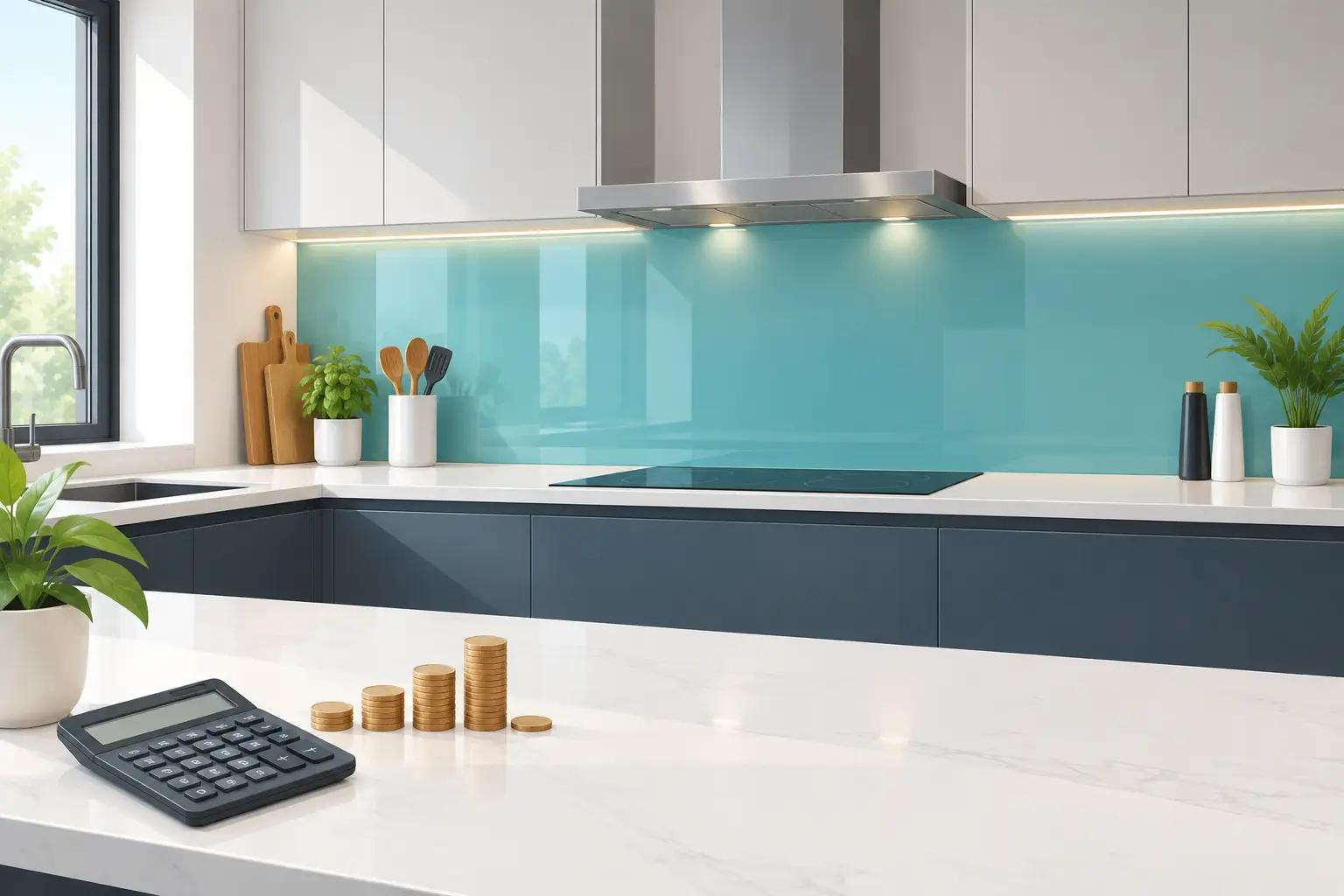
A glass splashback is often one of the final pieces of a kitchen renovation, but it can make or break the finished look. So, how much do glass splashbacks cost UK homeowners? For a made-to-measure toughened glass splashback, most projects fall somewhere between £250 and £1,200 supplied and fitted. The final figure depends far more on the size, specification and number of cut-outs than on the glass alone.
A small, straightforward panel behind a hob will naturally cost less than a full run of coloured glass with sockets, angled ends and matching upstands. The best way to budget is to understand what changes the price before choosing a colour or booking a measurement.
As a practical guide, a small single-colour glass splashback for a cooker area may cost from around £200 to £400 for supply only, or around £350 to £600 when professional measurement and fitting are included. A typical made-to-measure kitchen splashback with several panels often sits between £600 and £1,000 fitted.
Larger kitchens, feature walls and more detailed designs can cost £1,200 or more. This is particularly true where panels are oversized, include several socket cut-outs, require specialist handling, or use printed artwork, metallic finishes or low-iron glass.
These figures are useful for initial planning rather than a fixed price list. Every kitchen is different, and glass cannot be trimmed on site once it has been toughened. Accurate measuring, careful templating and the right specification are part of getting a panel that fits properly first time.
When comparing quotations, check whether they cover the full job or only the glass panel. A lower figure may not include a site survey, digital template, delivery, cut-outs, edge polishing, VAT or installation.
A proper made-to-measure quotation should clearly set out the glass type and thickness, the chosen colour or finish, polished edges, any required holes or cut-outs, delivery arrangements and fitting. This makes comparisons fairer and helps avoid unexpected extras later.
For homeowners, a supply-and-fit service is usually the simplest route. The installer can check wall conditions, final appliance positions and the location of sockets before the glass is manufactured. Supply-only can work well for experienced tradespeople and straightforward projects, but responsibility for measurements must be agreed from the outset.
Glass is priced partly by area, but the total is not simply a square-metre calculation. A small panel still needs to be cut, polished, painted or printed, toughened and quality checked. That is why a very small splashback does not cost a fraction of a larger one.
One long panel can sometimes look cleaner than several smaller pieces, with fewer joins to catch the eye. However, access matters. A very large sheet may be harder to carry through a property or safely manoeuvre into position, so splitting it into panels can be the more practical choice.
Every socket, switch, pipe opening or notch requires precise production work before toughening. A simple rectangular panel is the most cost-effective option. Add two or three socket cut-outs and the price rises, not only because of the machining but because the measuring has to be exact.
Shaped glass also takes more time. Sloping ceilings, boxed-in areas, exposed brickwork, extractor details and uneven walls are all manageable, but they need a proper template. Curves, radius corners and non-standard angles can be worth the extra cost when they solve an awkward detail neatly.
Kitchen splashbacks are normally made from toughened safety glass. This is essential behind a gas hob, where the glass needs to withstand heat, and is a sensible choice throughout the kitchen for strength and safety.
Standard clear toughened glass has a slight green tint, most noticeable with pale colours, whites and soft greys. Low-iron glass reduces that tint and gives a truer finish, but it costs more. For a deep navy, black or strong green splashback, standard glass may be perfectly suitable. For a crisp off-white or colour-matched pale grey, low-iron glass is often worth discussing.
Thickness can also influence the quotation. Six-millimetre toughened glass is common for splashbacks, though particular designs and fitting situations may call for a different specification. The right choice is about safe, tidy installation rather than simply choosing the thickest glass available.
A single painted colour is usually the most economical bespoke option. It offers a smooth, reflective surface that is easy to wipe clean and can be matched to kitchen doors, walls or a favourite sample.
Metallic colours, custom colour matching, printed images and digitally produced designs generally cost more. They involve additional preparation and finishing, and some designs need more careful consideration around joins and alignment. A printed marble effect can be an attractive alternative to stone, for example, but it needs to be planned as a visual feature rather than selected from a thumbnail alone.
Mirrored splashbacks can create depth in a smaller kitchen and reflect light well, but they have different considerations. They show marks more readily than a mid-tone painted panel, and their safety specification needs to suit the location, especially near a hob.
This is where local service can make a real difference. Kitchen walls are rarely perfectly straight, newly plastered surfaces can vary, and units may move slightly as work progresses. Measuring once the worktops, cabinets and sockets are in their final positions is the safest approach.
Professional fitting adds to the cost, but it also reduces the risk of an expensive mistake. Installers can account for expansion gaps, silicone finishing, wall condition and access. It is particularly valuable for long runs, heavy panels, tall feature pieces and kitchens with several cut-outs.
The most reliable saving is to simplify the specification where it does not affect the look you want. A standard painted finish instead of a printed design, square corners instead of shaped returns, and sensible panel sizes can all help keep the price under control.
It is also wise to finalise the kitchen before glass is measured. Changing a socket position, replacing an extractor or moving a hob after manufacture can mean ordering a new panel. Waiting until the key details are fixed is less frustrating than trying to make glass accommodate a late change.
Avoid choosing solely on the lowest initial quote. Toughened glass is made specifically for the dimensions and cut-outs agreed, so the quality of the measuring and production process matters. Ask what glass is being used, whether cut-outs and polished edges are included, and who will resolve a problem if site dimensions differ from the order.
A ready-made splashback can be a sensible budget choice for a standard-sized cooker space with no sockets or unusual details. Bespoke glass becomes the better option when you want the panel to run exactly between cupboards, fit around sockets, follow an angled wall, match a particular colour or cover a longer worktop run without compromise.
It is also the practical route for older properties, where walls and openings often have their own character. Rather than filling awkward gaps with trims or accepting uneven edges, a precisely measured panel can make the whole kitchen feel more considered.
Yorkshire Glass manufactures made-to-measure splashbacks in its Leeds workshop, so homeowners can discuss colours, samples, awkward shapes and fitting requirements with people who understand how the finished panel will be produced. That direct approach is especially useful when a project is not a standard rectangle.
Before requesting a price, take a few photographs of the area and note the approximate width and height of each panel. Mention the hob type, the number of sockets, whether you would like a solid colour, mirror or printed finish, and whether fitting is required. This gives a glass specialist enough information to provide a useful starting estimate.
For a firm quote, expect final measurements to be taken once the kitchen is ready. Bringing a cupboard door, paint sample or worktop offcut into a showroom can also make colour selection much easier than choosing from a screen.
A well-specified glass splashback should feel like a lasting part of the kitchen, not a hurried finishing job. Start with the look you want, be clear about the practical details, and let accurate measuring do the rest.