
Leeds Glass Suppliers. Call our team on
Get A Fast Quote
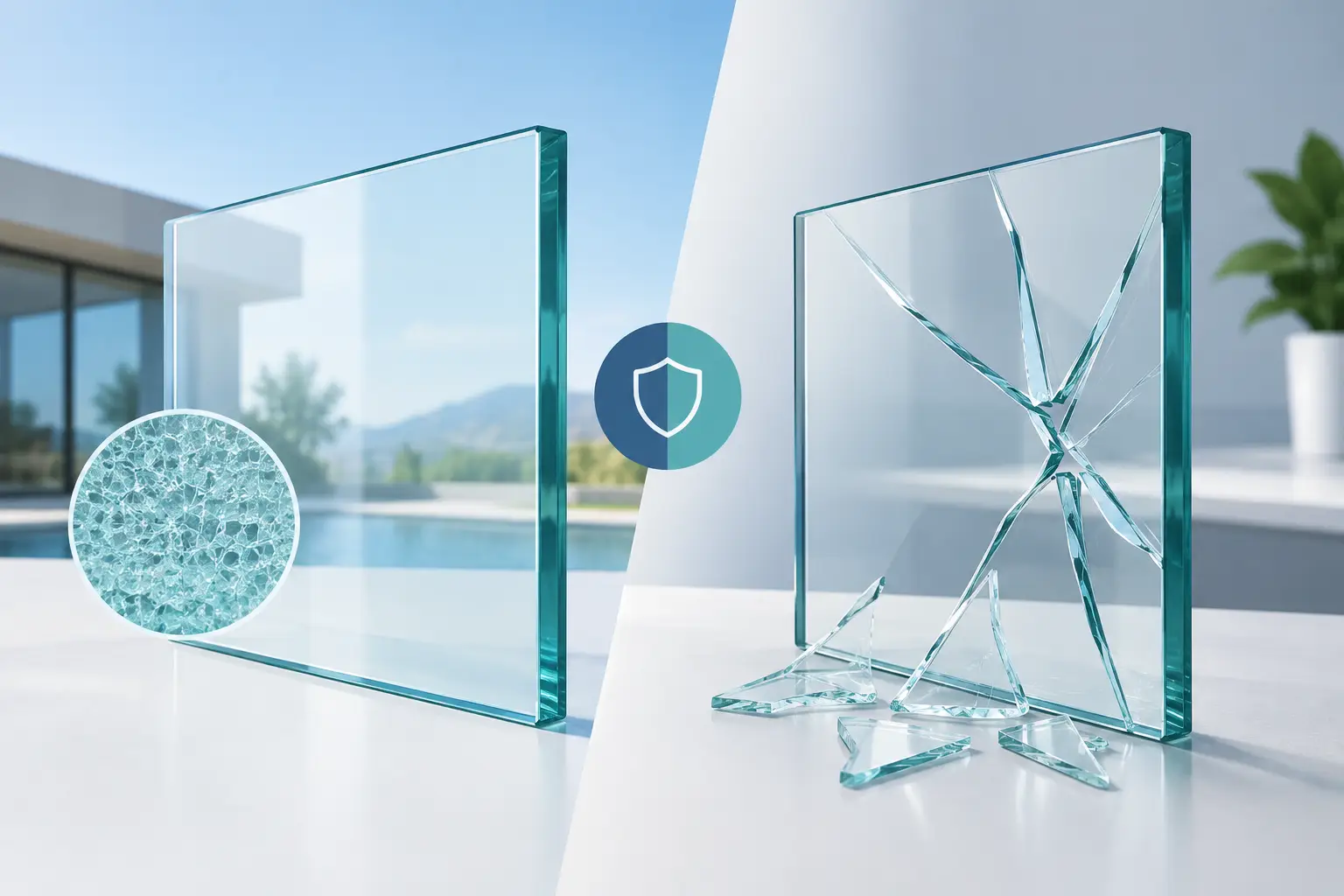
A kitchen splashback behind a gas hob, a frameless shower screen and a glass balustrade may all look similar at first glance. Their glass requirements are very different. Choosing between toughened versus annealed glass affects safety, durability, how the piece can be made and, ultimately, whether it is suitable for the job.
For many interior projects, toughened glass is the sensible choice. That does not make annealed glass inferior. It is the right material for plenty of applications, particularly where it is protected, supported or used in decorative work. The key is matching the glass specification to its location, size, fittings and likely day-to-day use.
Annealed glass is standard float glass that has cooled in a controlled way after manufacture. It is the starting point for much of the glass used in homes and commercial interiors. It is clear, flat and versatile, and it can be cut, drilled, shaped and finished to a bespoke size before further processing.
Toughened glass, also called tempered safety glass, begins as annealed glass. Once it has been accurately cut and worked, it is heated to a high temperature and cooled rapidly. This process places the outer surfaces under compression, making the glass much stronger against impact and thermal stress than ordinary annealed glass of the same thickness.
The most visible difference appears if the glass breaks. Annealed glass tends to break into large, sharp shards. Toughened glass is designed to break into many small, relatively blunt pieces. It can still cause injury, and a broken panel will need replacing promptly, but its break pattern significantly reduces the risk from dangerous sharp edges.
Toughening is a final manufacturing stage, not an upgrade that can be added once a pane is fitted. Holes for hinges or handles, notches around sockets, polished edges, shaped corners and cut-outs all need to be completed beforehand.
After toughening, glass cannot be cut, drilled or altered. Trying to do so will cause it to shatter. This is why precise measuring matters, particularly for shower screens, balustrades, shelves and splashbacks with socket cut-outs. A few millimetres can make the difference between a clean installation and a costly remake.
For bespoke work, it also pays to consider the whole installation early. Is the wall true? Are tiles already fitted? Where will brackets, hinges or fixings sit? Does the glass need holes, a shaped edge or a particular clearance from a hob? Sorting these details before manufacture gives the finished piece the best chance of fitting first time.
Toughened safety glass is commonly specified where people could fall against the glass, where heat is involved, or where a breakage could create a greater hazard. It is particularly well suited to kitchen splashbacks behind gas or electric hobs, shower screens, bath screens, glass doors, shelves, table tops and balustrade panels.
Heat resistance is a major reason it is used for splashbacks. A standard painted glass splashback behind a hob may be exposed to repeated changes in temperature, while pans and cooking utensils increase the chance of accidental knocks. Toughened glass handles this type of use far better than annealed glass.
For shower screens, toughened glass combines a clean frameless appearance with the strength needed for daily opening, closing and cleaning. The required thickness will depend on the design, panel size, hinges and support. A fixed screen, for example, may need a different specification from a hinged door.
Balustrades demand additional care. Toughened glass may be part of the answer, but it is not always enough on its own. In many situations, laminated toughened glass is specified so that an interlayer helps hold the panel together if it breaks. The correct choice depends on the system, the fixing method, fall risk and relevant building requirements. This is a project where professional advice should be built in from the start.
Annealed glass remains a practical and cost-effective material when it is not exposed to significant impact, heat or a safety-critical location. It is often used in picture frames, display areas, internal decorative panels, certain mirrors and sealed double glazed units, depending on the overall specification.
It is also useful during design development because it can be cut and processed more easily than a finished toughened panel. For a protected glass table insert, a cabinet panel or a decorative wall feature outside a high-risk area, annealed glass may offer exactly what is needed without paying for a safety treatment that adds no real benefit.
That said, the intended use matters more than the product name. A glass top in a quiet corner of a room may be fine in annealed glass when fully supported. The same top on a busy family dining table, with exposed edges and chairs moving around it, may be better made from toughened glass. There is no one-size-fits-all answer.
Toughened glass is generally around four to five times stronger than annealed glass of the same thickness, though performance varies with the panel’s size, edge treatment, fittings and how the load is applied. Glass often fails from an edge impact, so polished and well-finished edges are as much about performance as appearance.
Toughened glass also has a trade-off that surprises some customers: when it does fail, the entire pane usually breaks. Annealed glass may crack and remain partly in place, although with sharp and unsafe fragments. Laminated glass addresses a different need by using an interlayer to retain broken pieces. For overhead glazing, balustrades and particular safety applications, that retained integrity can be more useful than toughening alone.
A good specification considers all three possibilities: annealed, toughened and laminated glass. The best option is based on the application, not simply the strongest-sounding description.
Yes, toughened glass normally costs more than annealed glass because of the extra processing, quality checks and careful preparation required before it goes into the toughening furnace. Bespoke holes, shaped cut-outs, polished edges, painted finishes and unusual sizes can also affect the price.
However, the upfront difference should be weighed against performance and suitability. Saving money on glass behind a hob or in a shower enclosure can be false economy if the panel is not designed for its environment. On the other hand, specifying toughened glass for every decorative panel may add cost without delivering a worthwhile practical benefit.
Manufacturing to measure helps keep this decision sensible. Rather than adapting a standard panel to an awkward opening, a properly specified piece can be made to suit the room, fittings and finish from the outset.
Before choosing glass, think about where it will sit, who will use it and what could happen around it. Heat, moisture, children, pets, moving furniture, opening doors and exposed edges all change the answer. So do the dimensions of the panel and the way it will be fixed.
For a kitchen splashback, confirm the hob type and locations of sockets. For a shower screen, establish the finished tile line, tray level, hinge positions and any out-of-plumb walls. For a balustrade, the complete system and safety requirements should be considered together, not panel by panel.
It is worth bringing measurements, photographs and a rough sketch when discussing a bespoke piece. At Yorkshire Glass, our Leeds workshop team can help turn a clear idea - or even a difficult space with a few unknowns - into a workable glass specification.
The right glass should not merely fit the opening. It should suit the way the space is used, look right alongside the rest of the interior and give you confidence long after installation day.