
Leeds Glass Suppliers. Call our team on
Get A Fast Quote
A misted pane, a cold patch beside the window or traffic noise that seems far too present in the room are not always signs that the whole window needs replacing. Often, the issue is the sealed double glazing unit itself. Choosing the right replacement can improve comfort, clarity and energy performance while keeping sound frames that still suit your home.
For homeowners across Leeds and Yorkshire, the best result is rarely about buying the thickest glass available. It is about specifying a unit that fits precisely, suits the window or door system, and addresses the problem you actually have.
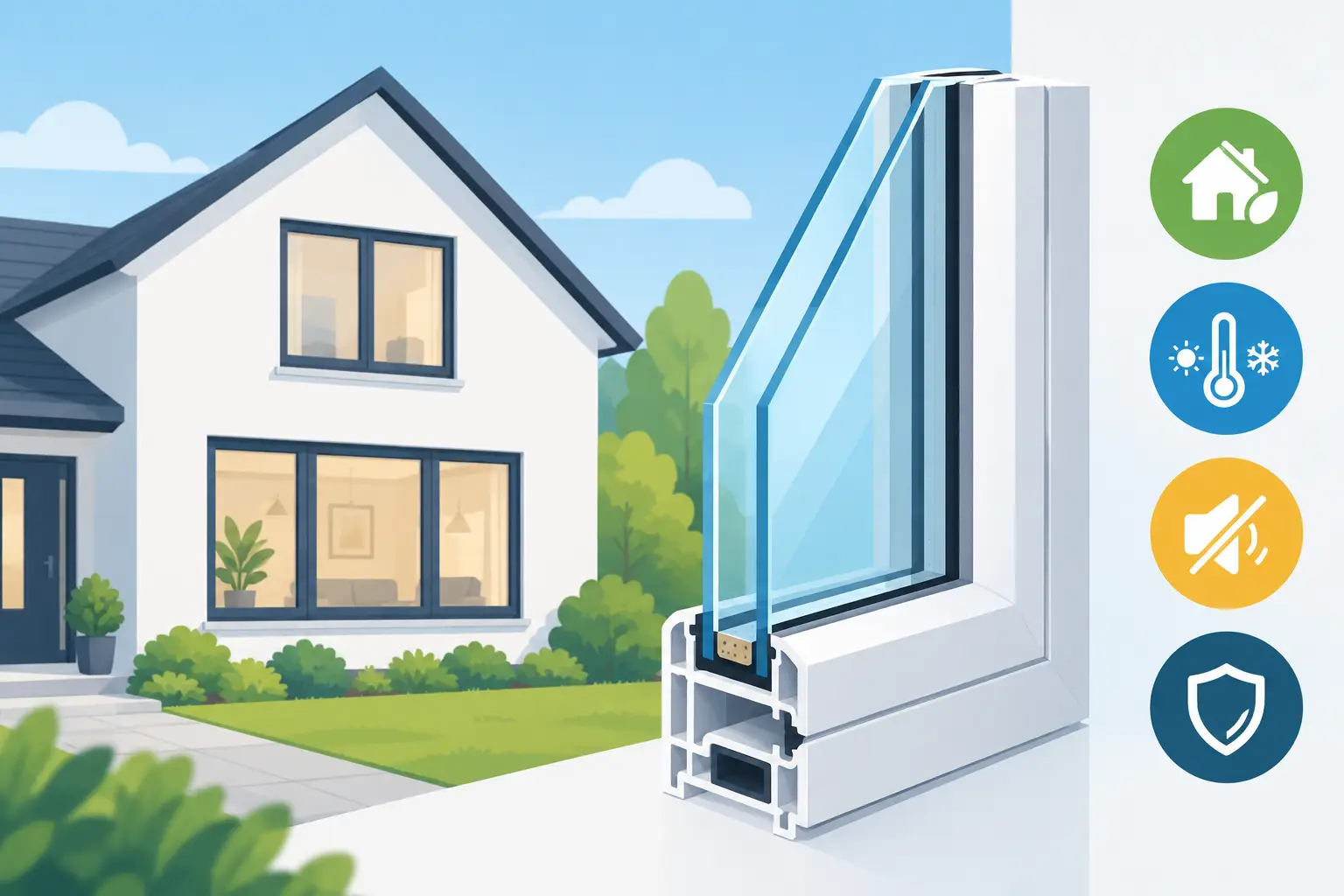
A double glazed unit is made from two panes of glass separated by a spacer bar and sealed around the edge. The gap between the panes is filled with air or, more commonly in higher-performing units, an insulating gas such as argon. This construction slows the transfer of heat through the glass compared with a single pane.
The sealed cavity does more than retain warmth. It can also reduce condensation on the room-facing glass, limit outside noise and make rooms near windows and patio doors feel less draughty. However, glass is only one part of the picture. A poorly fitted unit, tired hinges, damaged seals or gaps around a frame can all affect how a window performs.
That is why it is worth diagnosing the cause before ordering replacements. If condensation is sitting between the panes, the unit’s edge seal has failed and replacement is usually the practical answer. If moisture is on the inside surface of the glass, everyday ventilation, heating patterns and indoor humidity may be playing a bigger part.
A good unit starts with accurate dimensions. Sealed units are manufactured to fit within a particular frame, including the correct overall thickness. A few millimetres can make the difference between a secure fit and a window that will not bead correctly or seal as it should.
The glass specification then needs to match the location. Standard clear units are suitable for many homes, but they are not the only option. Low-emissivity, often called Low-E, glass has a near-invisible coating that helps reflect heat back into the room. It is a sensible choice where warmth and lower heat loss are priorities.
The spacer bar matters too. Older units often use aluminium spacers, while warm-edge spacers are designed to reduce heat loss at the perimeter of the glass. They can also help reduce the risk of cold-edge condensation. It is a small detail, but it is part of the overall performance of the finished unit.
For most domestic windows, a standard cavity with argon gas and Low-E glass offers a useful balance of insulation, cost and availability. There are cases where a more specialised specification is worthwhile, but paying for extras that do not suit the frame, orientation or use of the room will not automatically deliver better results.
Not every pane in a double glazed unit needs the same thickness. Different thicknesses can be used to improve acoustic performance, while toughened safety glass may be required in critical locations such as doors, low-level glazing, sidelights or areas close to a bath or shower.
Safety glass is designed to break into small, less hazardous pieces if damaged. Laminated glass is another option where added security, safety or noise reduction is needed. It holds together when broken because an interlayer sits between two sheets of glass.
The correct choice depends on where the glass is installed and how the opening is used. A ground-floor patio door has different demands from a first-floor bedroom window. This is where practical advice is more valuable than a one-size-fits-all specification.
Replacing failed glass units can be a cost-effective option when the existing frames are sound. If the uPVC, timber or aluminium frame is structurally in good condition, opens and closes properly, and still suits the property, there may be no need to replace the entire window.
Common signs that a sealed unit has reached the end of its life include mist or droplets between the panes, a permanently cloudy appearance, visible staining inside the cavity, or a noticeable cold area around the glass. The unit cannot be dried out from the outside because the seal has already failed. It needs to be removed and replaced.
Replacement is also worth considering during a renovation. Perhaps you are changing a patio door panel to obscured glass for privacy, improving a bathroom window with patterned glass, or upgrading a large fixed pane to a safer specification. Made-to-measure units allow those changes without forcing a complete overhaul of every frame.
There are limits. If frames are warped, rotten, badly draughty or nearing the end of their serviceable life, new glass alone may only postpone a larger job. Equally, if the installation has persistent water ingress or failed hardware, those faults should be dealt with alongside the glazing.
It is tempting to expect one unit to solve every problem at once. In practice, performance is about compromise and sensible specification.
If warmth is the main concern, Low-E glass, a suitable cavity and warm-edge spacer are usually the starting points. Remember that large areas of glass will still feel cooler than an insulated wall during winter, even when the unit is performing correctly.
If road noise, neighbours or a busy street are the issue, acoustic improvement often comes from using panes of different thicknesses, rather than simply making both panes thicker. Laminated acoustic glass can be particularly useful in the right setting. The frame, opening seals and any trickle vents must be considered as well, because sound will find the weakest route.
For privacy, obscured, patterned or sandblasted effects can be specified within a sealed unit. These are popular for bathrooms, entrance doors and overlooked side windows. Think carefully about the level of obscurity and which side of the glass needs the pattern or finish, particularly if the window faces a path or neighbouring property.
Solar control is another consideration for south-facing rooms, conservatories and large glazed areas. Certain coatings can help reduce solar gain, but they may also alter the appearance of the glass or reduce some useful winter warmth. The right answer depends on how the room is used through the year.
Double glazed units are not a product where an approximate measurement will do. The visible glass size is not necessarily the size needed for manufacture, as part of the unit sits behind the glazing bead and within the frame.
A proper specification should establish the width, height, thickness, glass type, spacer finish and any safety markings required. The location of drainage, packers and glazing beads can also affect fitting. For shaped glass, leaded designs or unusual openings, the details become even more important.
If you are replacing one unit yourself, remove no glass until you are confident of the required size and construction. For larger, heavier or safety-critical panes, professional measurement and fitting are the safer route. This is especially true for doors, overhead glass and panels in balustrades or other areas where the glass performs a structural or protective role.
Yorkshire Glass manufactures made-to-measure sealed units in Leeds and can help establish the specification when a standard replacement is not enough. That local approach is particularly useful for unusual sizes, patterned or coloured requirements, and projects where timings need to be clear from the outset.
A sealed unit needs little specialist maintenance, but regular checks can help you spot issues early. Clean the glass with a non-abrasive cleaner and soft cloth, and avoid scraping aggressively at stubborn marks near the edge seals.
Keep drainage channels in window frames clear so water can escape as intended. Check that opening sashes close evenly and that worn seals, hinges or handles are not leaving gaps. In bathrooms and kitchens, use extractor fans and background ventilation to control moisture in the room. This will not repair a failed unit, but it can reduce surface condensation and protect the wider window system.
A clear, well-fitted unit should make a room feel calmer without demanding attention. If yours has misted, cracked, become noisy or no longer gives the privacy you need, taking a few accurate details and speaking to a local glass specialist is a straightforward place to start.