
Leeds Glass Suppliers. Call our team on
Get A Fast Quote
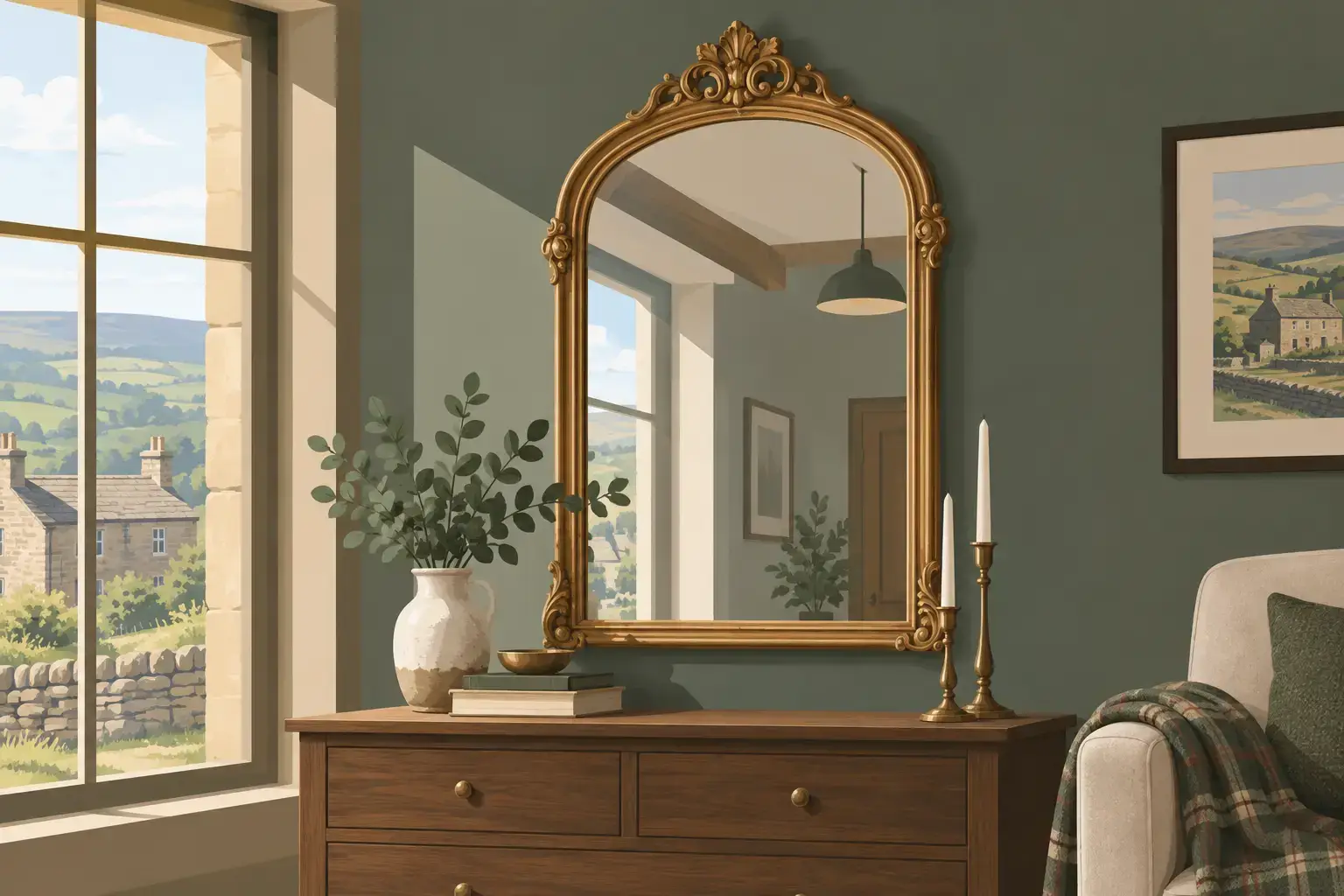
A well-chosen mirror can do more than make a room feel larger. Antique mirrors introduce movement, warmth and a little visual history, even in a newly fitted kitchen or bathroom. Their softly distressed surface catches light differently throughout the day, which makes them a practical design feature rather than simply a reflective panel on the wall.
For homeowners who want something less predictable than a clear, modern mirror, antique finishes offer real character without making a room feel overly formal. The key is choosing the right finish, size and position for the space - then having it made accurately to suit the surrounding furniture, tiles and fittings.
Antique mirror glass is made to give the appearance of an aged looking glass. Rather than a perfectly uniform reflection, it has deliberate variations in tone and pattern. These can include subtle clouding, darker edges, delicate speckling and areas of softer reflection. The exact effect depends on the chosen design and how the light falls across it.
This irregularity is what gives antique mirror its appeal. A standard mirror is designed to disappear into a scheme, apart from its reflection. An antique finish is visible in its own right. It adds texture to a plain wall and can break up large runs of cabinetry, panelling or tiling without introducing another strong colour or material.
It is worth separating decorative antique mirror glass from a genuinely old mirror. Original pieces can be beautiful, but they may have damaged backing, uneven silvering, fragile glass and sizing restrictions. Made-to-measure antique mirror gives you the look while allowing the panel to be specified for the project at hand, whether that means an oversized wall feature, a set of cupboard doors or an awkward alcove.
Some antique finishes are quite understated, with gentle silver-grey ageing that works well in calm, contemporary interiors. Others have more pronounced bronze, smoke or black detail, creating a richer and more dramatic effect. Neither is automatically better. It depends on the amount of natural light, the colours already in the room and how large the mirror will be.
In a smaller, darker room, a heavily distressed design can absorb light and feel busy if used across a whole wall. A lighter antique effect may retain the sense of space while still bringing warmth. In a larger room with simple finishes, a bolder aged mirror can become the feature that gives the scheme definition.
Seeing a sample before finalising the order is always sensible. The same finish can look noticeably different next to warm oak, painted joinery, marble-effect worktops or cool grey tiles. It also helps to view it in the light it will live with, rather than relying only on a photograph.
Antique mirror is particularly effective where a clear reflection is not the only purpose. In living rooms and dining rooms, it can be fitted above a fireplace, behind open shelving or as a full-height wall panel to bring depth to a long, narrow space. Its aged surface is more forgiving than a standard mirror too, which can be useful in rooms where a bright, sharp reflection would feel stark.
In bedrooms, it works beautifully behind bedside tables, within fitted wardrobes or above a dressing table. A pair of matching panels either side of a bed can make a wall feel more balanced without the weight of additional furniture. If the mirror is intended for daily use when getting ready, keep the most decorative finish for surrounding panels and use a clearer mirror where an accurate reflection matters.
Antique mirror splashbacks and feature panels can add depth behind shelving, in a bar area or on the face of an island. They are especially popular in kitchens with dark cabinetry, brass hardware or natural timber, where the reflected light prevents the scheme from becoming too heavy.
Behind a hob, however, specification matters. Heat, cooking moisture and cleaning products place greater demands on glass than a decorative wall panel. The mirror and its backing must be suitable for the location, and the piece needs to be manufactured and fitted correctly around sockets, switches and cut-outs. It is not a job for a standard off-the-shelf mirror cut down on site.
For a kitchen that needs a more practical, easy-clean finish directly behind the cooking area, it may make sense to use a toughened painted glass splashback there and bring antique mirror into a less exposed section. This creates the same sense of interest while matching each material to the job it needs to do.
An antique mirror can give a bathroom a hotel-inspired feel, particularly above a vanity unit or as a decorative panel behind wall lights. Moisture is the main consideration. Bathrooms have changing temperatures, steam and regular cleaning, so the mirror must be appropriate for the zone and installed with suitable materials.
Avoid assuming that any decorative mirror can be placed around a basin or shower area. Discuss where it will sit, how often the room is ventilated and whether it will be near direct water spray. In some cases, a different mirror design or a change in panel position is the better long-term choice.
The most successful mirror installations look intentional because the dimensions relate to the room. Above a sideboard, fireplace or vanity unit, the mirror is often slightly narrower than the furniture below it. That is a helpful starting point, although a full-width panel can work well where the aim is to make a wall feel wider.
For alcoves and fitted furniture, made-to-measure sizing is the difference between a tailored result and a panel that looks added as an afterthought. Precise measurement also allows for practical details: socket holes, notches around shelves, cut-outs for lighting, shaped corners and safe clearance around appliances.
Edges deserve attention as well. A polished edge gives a clean, refined finish where the glass will be visible. Where the panel is framed, recessed or finished against joinery, the edge treatment may be less noticeable but remains part of a tidy, safe installation. If several panels are being used together, consistent joint lines and carefully planned symmetry matter as much as the mirror itself.
Glass does not forgive inaccurate measurements. Walls can be out of square, old chimney breasts can bow, and newly tiled surfaces may not be as flat as they appear. For simple, accessible openings, customers may provide dimensions, but larger panels, tricky walls and projects involving cut-outs are often best measured professionally.
Before manufacture, think through how the glass will reach its final position. A large panel may fit the wall perfectly but be difficult to carry up a narrow staircase or around a tight landing. Splitting the design into several sections can be the practical solution, and well-planned joints can become part of the overall look.
Installation also needs the right fixing method for the substrate and panel size. Mirror adhesive, mechanical fixings or a combination of both may be appropriate. The correct choice depends on the wall construction, the finished edge detail and whether the panel may need to be removed in future. Heavy glass should never be treated as a quick decorating job.
Yorkshire Glass manufactures bespoke mirror panels in its Leeds workshop, helping homeowners and trade customers work through these details before the glass is cut. For unusual shapes, large sizes or installations with several cut-outs, early advice can prevent expensive alterations later in the project.
Antique mirror should be cleaned gently. Use a soft microfibre cloth and a small amount of suitable glass cleaner applied to the cloth, rather than sprayed directly onto the panel. This reduces the risk of liquid reaching the edges or backing of the mirror.
Avoid abrasive pads, strong solvents and excessive moisture, particularly around exposed edges. If the mirror is fitted in a bathroom or kitchen, good ventilation and prompt removal of splashes will help preserve its appearance. The varied surface is part of the design, so do not expect it to behave like a flawless plain mirror - that is exactly where its character comes from.
If you are planning antique mirror into a renovation, bring a cabinet door, tile sample or paint colour when discussing finishes. A small comparison at the start can turn a good idea into a feature that feels made for the room.