
Leeds Glass Suppliers. Call our team on
Get A Fast Quote
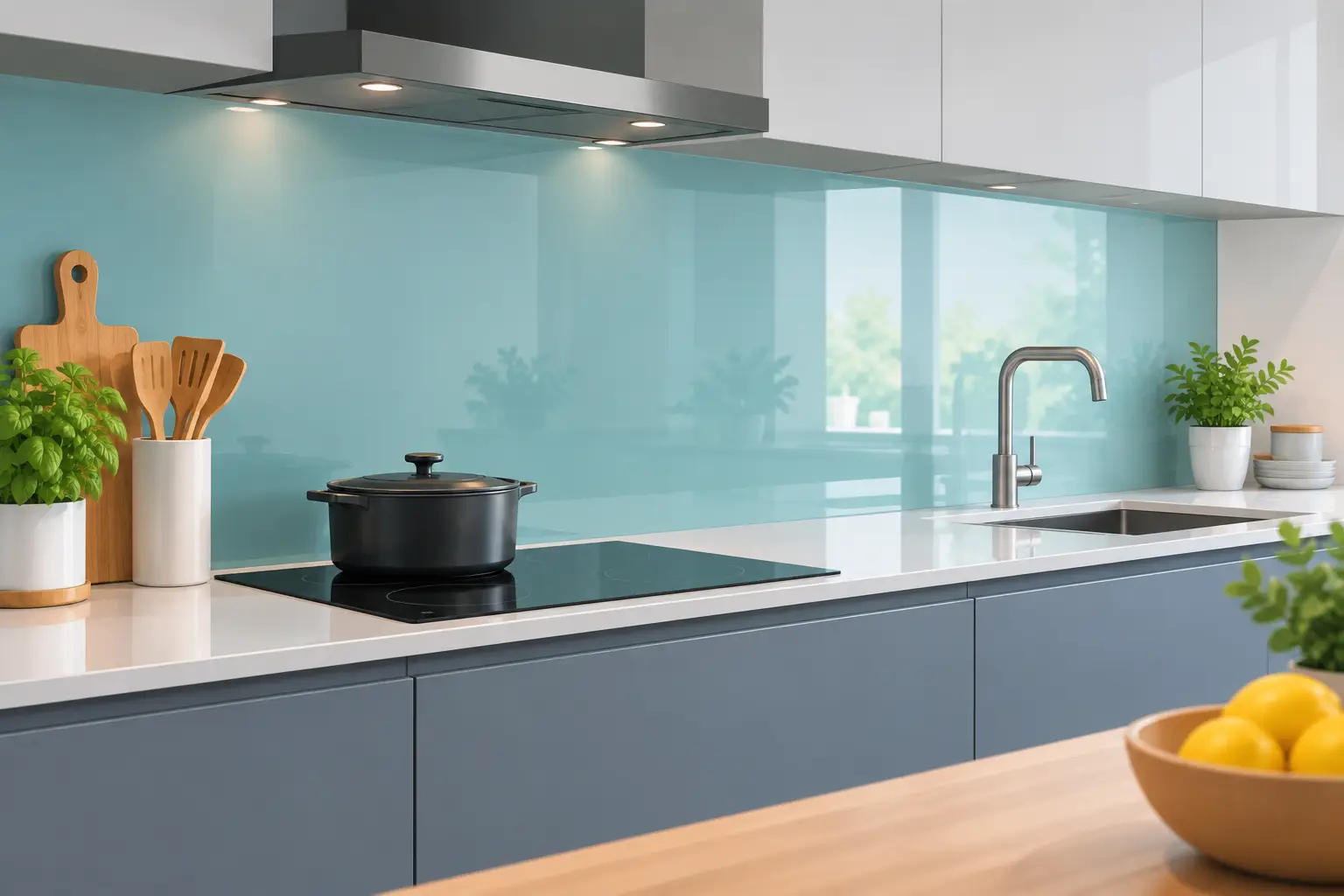
A kitchen splashback has a demanding job. It sits behind hobs, catches cooking splashes, faces steam and regular cleaning, and still needs to look right when the room is otherwise finished. That is why glass splashback durability matters as much as colour and style. A properly specified and fitted glass splashback can stay smart for many years, but its performance depends on the glass, the manufacturing process and the care taken at installation.
For homeowners planning a new kitchen in Leeds or elsewhere in Yorkshire, the reassuring point is that toughened glass is made for exactly this sort of interior use. It is not a fragile decorative extra. However, it is worth understanding where its strengths lie, and the few situations that can cause problems.
The starting point is toughened safety glass. This is glass that has been cut and processed to the required size, then heated and rapidly cooled in a controlled process. That treatment puts the outer surfaces under compression, making the finished panel considerably stronger than ordinary annealed glass.
For a kitchen splashback, toughened glass is normally the right choice because it is designed to cope with the everyday knocks and temperature changes found around a worktop and hob. If it does break, it is intended to fracture into small, less hazardous pieces rather than large sharp shards.
Thickness also has a role. Many splashbacks are made in 6mm toughened glass, which offers a substantial feel and reliable performance for most domestic kitchens. The best specification can vary with the panel size, the number of cut-outs, the wall condition and where the glass will be fitted. A large one-piece panel behind a range cooker, for example, needs proper assessment rather than a one-size-fits-all answer.
The key point is that glass must be fully cut, drilled and shaped before it is toughened. Holes for sockets, notches around units and shaped edges cannot be added later. Accurate measuring at the outset protects both the fit and the finished panel.
Heat is often the first concern, particularly for customers choosing a splashback directly behind a gas hob. Toughened glass handles normal cooking temperatures well, and it is widely used in this position. The issue is usually not everyday heat, but extreme and very localised thermal shock.
A pan knocked hard against the glass, a damaged burner producing an unusually high flame, or a hot object held directly against one spot can place unnecessary stress on any surface. Following the hob manufacturer's clearance guidance is essential, especially with gas appliances. Some installations may need a greater gap or a different solution depending on the appliance and its output.
Induction and electric hobs generally place less direct flame exposure on the splashback, but the same principle applies: specify the panel correctly and leave the fitting to people who understand the appliance requirements. A splashback should complement a safe kitchen layout, not be used to work around unsuitable clearances.
Unlike grout lines in tiled splashbacks, the face of a glass panel is smooth and non-porous. It will not absorb cooking oils, water marks or food stains. That makes it particularly practical behind sinks, on short return walls and across long runs of worktop where cleaning time matters.
For day-to-day care, a soft microfibre cloth and a non-abrasive glass or kitchen cleaner are normally enough. Wipe off grease before it builds up, then dry the panel to reduce streaking. Avoid scouring pads, gritty powders and metal scrapers. Toughened glass is strong, but its polished surface can still be scratched by abrasive materials.
The painted side of a coloured glass splashback sits at the back of the glass, protected from splashes and cleaning products by the panel itself. This is one reason a professionally finished glass splashback can retain its depth of colour so well. The visible surface is glass, not exposed paint.
Toughened glass is highly durable, but it is not indestructible. Its edges are more vulnerable than its broad face, particularly before installation. A sharp impact on an exposed corner can cause damage that would not happen from normal wiping or cooking splashes.
This is why handling, transport and fitting matter. The wall should be suitably flat and clean, with no proud screw heads, loose plaster or debris behind the panel. Fitters also need to allow appropriate clearance around sockets, cabinets and worktops, rather than forcing the glass tightly into a space that is slightly out of square.
Cut-outs deserve special attention. Socket holes, notches and internal corners concentrate stress, so they need to be measured and manufactured precisely. There is no benefit in trying to make a splashback too tight around an obstacle. A neat, sensible tolerance and a clean finish give the glass room to sit correctly.
Occasionally, a glass panel can break because of an inclusion within the glass known as nickel sulphide. This is rare, and it can happen some time after installation. It is not usually caused by cleaning or ordinary use. For projects where reducing this already low risk is particularly important, such as larger commercial or high-specification installations, heat-soak testing may be worth discussing as part of the glass specification.
It can, provided the colour finish is appropriate for the application and applied properly. A back-painted glass splashback is a durable choice because the colour is sealed behind the toughened glass. It is protected from the steam, grease and cleaning that the front face receives every day.
The wall behind the glass can affect how the finished colour appears. Pale colours can be influenced by an uneven or dark background, while strong shades and metallic finishes may have their own fitting requirements. Viewing samples in person is useful here. A colour that looks right under showroom lighting may appear warmer or cooler in a north-facing kitchen or beneath under-cabinet lights.
For customers matching a particular cabinet, worktop or wall paint, bespoke colour matching offers more control than choosing from a limited stock range. It also means the glass can be made to the actual dimensions of the space, rather than asking a kitchen design to work around a standard panel.
A durable splashback starts with a careful survey. Walls in older properties are not always perfectly level, and existing kitchens can have small variations around upstands, cupboards and electrical points. Measuring properly avoids last-minute trimming attempts, which are not possible once glass has been toughened.
Adhesive should be compatible with the glass and the backing finish. It needs to support the panel evenly without showing through or reacting with the painted surface. The glass should then be positioned accurately, with tidy sealant where required around worktops or wet areas. Sealant is not just cosmetic - it helps prevent water and grime collecting in the gap at the base of the panel.
There is also a practical decision between one large piece of glass and several smaller panels. A single panel creates a clean, uninterrupted look with fewer joins to clean. Smaller pieces can be easier to manoeuvre into a restricted property, around awkward corners or up a narrow stairwell. Neither is automatically better; the right approach depends on access, size, design and budget.
The longest-lasting choices are often the simplest to live with. A polished edge, accurately placed socket cut-outs and a colour you will not tire of will do more for long-term satisfaction than a trend that quickly dates the room. Neutral shades, soft greys, off-whites and deep blacks remain popular for a reason, but a bold bespoke colour can work brilliantly when it is tied to the wider kitchen scheme.
It is also sensible to think beyond the initial fitting. Can sockets be accessed safely? Is the glass positioned to allow for a new hob if appliances change later? Does the design account for an upstand or a slightly uneven wall? These are the questions that prevent an attractive panel becoming a difficult detail later on.
At Yorkshire Glass, panels are manufactured in-house in Leeds, allowing the team to check dimensions, cut-outs, colour and finish before the glass reaches site. For an unusual kitchen layout, a large feature panel or a tricky set of sockets, that direct involvement can make a real difference.
A glass splashback should feel like a permanent part of the kitchen, not a delicate surface you have to worry about. Choose toughened glass, make sure the measurements and appliance clearances are right, and treat the edges with care during fitting. Then it can handle the daily reality of cooking while keeping the kitchen looking clean and considered for years to come.