
Leeds Glass Suppliers. Call our team on
Get A Fast Quote
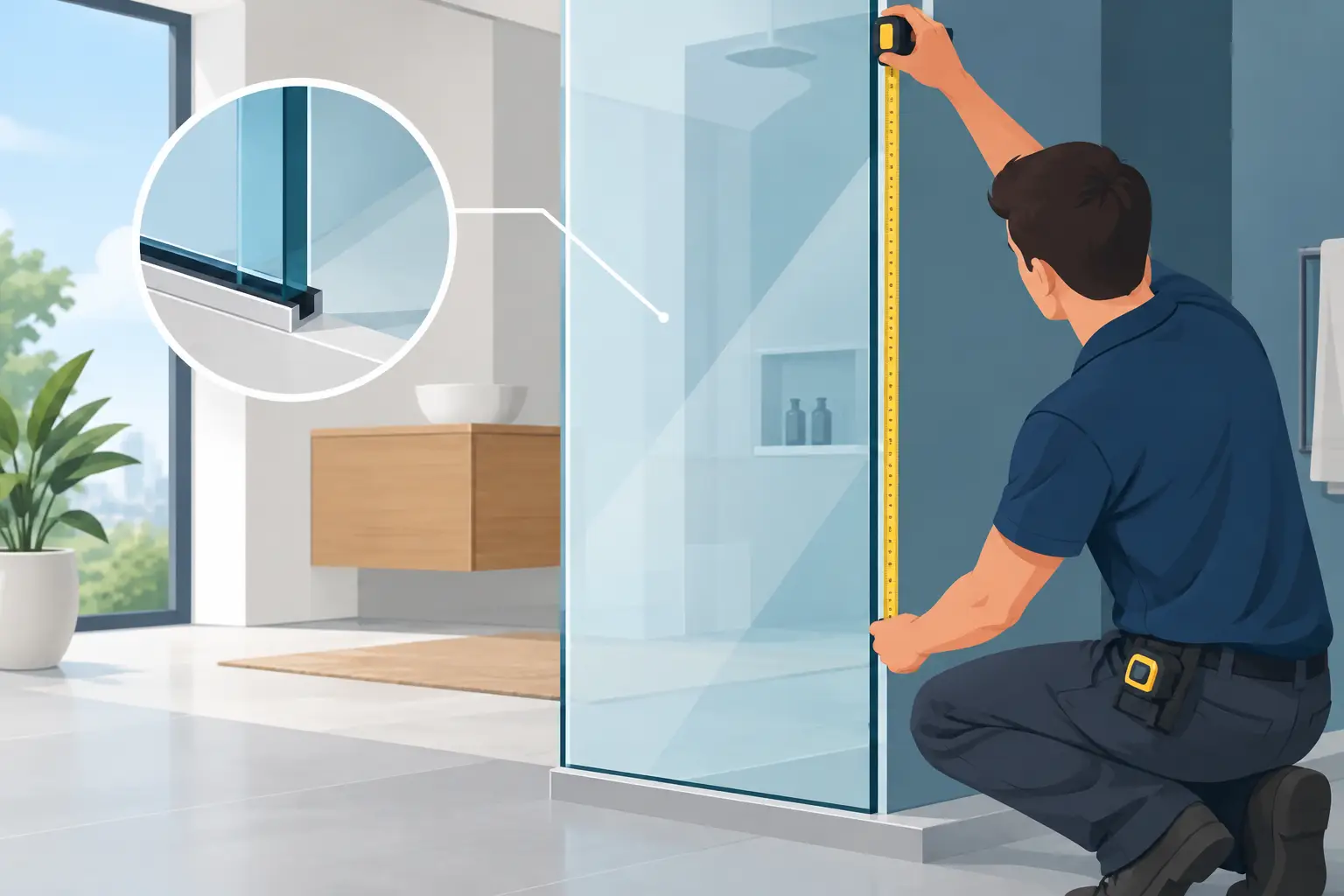
A splashback that finishes 8mm short of the wall, a shower screen that leaves an awkward gap, or a mirror that sits off-centre can make an otherwise well-planned room look unfinished. Made to measure glass avoids those compromises. It is produced for the space, the fittings and the finish you have chosen, rather than asking you to adapt your project around standard sizes.
For homeowners, that means a cleaner result in kitchens, bathrooms and living spaces. For installers, designers and trade customers, it means clearer specifications, fewer site surprises and glass that arrives ready for the job. The difference is not simply the size on the drawing. It is the care taken with measuring, glass type, edgework, cut-outs and safe fitting.
Off-the-shelf glass has its place. A standard shelf or small table top can be a sensible, quick choice where exact dimensions are not critical. But most architectural and interior glass sits alongside walls, units, tiles, flooring, ironmongery or existing joinery. Those surfaces are rarely perfectly square, level or consistent from one end to the other.
A bespoke piece can account for the details that standard products cannot. That might be a socket cut-out in a kitchen splashback, a sloping ceiling above a shower enclosure, hinge positions for a glass door, or a shaped corner around a beam. The result is more considered, but it is also more practical. Correctly specified glass is easier to install, easier to keep clean and less likely to need last-minute alterations on site.
There is a value decision to make. Made to measure glass costs more than a standard panel because it involves individual production and, often, additional finishing. Yet it can prevent the cost and frustration of forcing a near-fit item into place, ordering a replacement, or accepting visible filler strips and uneven gaps.
The best specification starts with use, not appearance. A decorative mirror and a walk-in shower screen may both look simple, but they have very different requirements.
A glass splashback needs to suit the heat and activity around a hob, as well as the colour scheme of the kitchen. Toughened glass is commonly required behind cooking areas because it is designed to withstand higher temperatures and, if broken, fractures into small pieces rather than dangerous shards. Any holes or cut-outs for sockets, switches or fixings must be planned before toughening, as toughened glass cannot be cut or drilled afterwards.
For worktop protectors, dining tables and furniture tops, consider thickness, edge finish and how the glass will sit on the surface beneath. Polished edges provide a smooth, refined finish where edges will be visible. A clear glass top can protect timber while keeping its character on show, whereas tinted or coloured glass can become part of the design in its own right.
Bathroom glass has to cope with everyday use, water, cleaning and movement around the room. A shower screen should be sized around the actual tray, walls and fittings, not only the nominal dimensions shown on a product label. Walls can lean slightly, tiles add depth and trays are not always positioned exactly as expected.
The thickness of the glass, the type of hinges or channels, and the door arrangement all affect how the enclosure feels in use. A heavier panel may give a more substantial feel, while a slimmer configuration can suit a compact bathroom. Neither is automatically better. The right choice depends on the opening, the support available and who will be using the space.
A made-to-measure mirror can transform a narrow hallway, dark bedroom or alcove that no standard mirror quite suits. It can be cut to fill a wall section, fit between wardrobes or work around lights and sockets. Coloured and antique mirrors offer a less conventional alternative to clear mirror glass, bringing warmth, depth or a period-inspired finish to a bar area, fireplace surround or feature wall.
When choosing a large mirror, think beyond the reflected view. Consider where the edges will finish, whether the wall is sound enough for the weight, and what the mirror will reflect at different times of day. A well-positioned mirror can brighten a room. One facing clutter or a harsh light source may not deliver the effect you had in mind.
Glass fabrication is precise, so measuring must be too. For straightforward pieces, a clear width and height may be all that is needed. For more involved work, the team will need details of angles, notches, holes, cut-outs, fitting positions and the surfaces the glass meets.
Do not assume that an opening is square because it looks square. Measure at more than one point where possible, particularly in older properties. If dimensions differ, record each measurement rather than choosing an average. It is also sensible to confirm whether you are measuring the finished surface - such as tiles - or a wall that will still receive cladding, plaster or trim.
For shower glass, balustrades, large mirrors and unusual shapes, professional site measurement can remove uncertainty. This is particularly useful where several trades are involved or where the glass depends on fixtures already being in their final position. A careful survey allows the fabricator to spot potential issues early, before production begins.
Photographs are useful alongside measurements. A wide shot shows the overall setting, while close images can reveal sockets, tile joints, pipe boxing, uneven corners and existing fixings. A simple sketch with dimensions marked clearly can be just as helpful as a detailed plan.
Glass is not a single material with one set of properties. The specification should reflect where it will be used and how exposed its edges will be.
Toughened safety glass is a common choice for doors, shower screens, splashbacks, balustrades and areas where impact safety matters. Laminated glass may be appropriate for certain overhead, guarding or specialist applications because its interlayer helps hold fragments together if the panel breaks. The correct option depends on the product, building requirements and how the glass is supported.
Edges deserve attention too. Arrissed edges have sharpness removed and are often suitable where an edge is concealed. Polished edges are smoother and more presentable for exposed glass, mirrors and furniture tops. Bevelled or shaped edges can add a decorative detail, though they are not necessary for every project.
Colour is another decision best made with samples where possible. A shade viewed on a screen can look different under warm kitchen lighting, daylight or bathroom spotlights. Bring cabinet doors, tile samples, paint cards or worktop offcuts when discussing coloured glass. A local showroom makes that comparison far easier than choosing from a photograph alone.
When a glass piece is being made specifically for your project, communication matters as much as machinery. A local fabricator can discuss practical details before work begins, make sense of an unusual drawing and provide a realistic lead time based on the actual specification.
Yorkshire Glass manufactures in its Leeds workshop, which gives the team direct oversight of cutting, processing and quality checks. That is useful when a project involves non-standard sizes, shaped panels, coloured finishes or several pieces that need to align. It also means there is a knowledgeable person to speak to if a measurement changes or an installation question arises.
For trade customers, in-house production supports clearer coordination with site programmes. For homeowners, it offers reassurance that the people quoting the job understand the product being supplied. Fast service is valuable, but accuracy should come first. A panel made too quickly from incomplete information is not a saving.
Start with the room, the intended use and a few accurate measurements. Bring your ideas, photographs and material samples to the conversation, especially if the piece needs to match a particular colour or work around existing features. If you are uncertain about thickness, safety glass, fittings or installation, ask before placing the order rather than guessing.
The right made to measure glass should look as though it has always belonged there. With sound measurements, suitable specification and practical advice at the outset, that polished final detail becomes much easier to achieve.