
Leeds Glass Suppliers. Call our team on
Get A Fast Quote
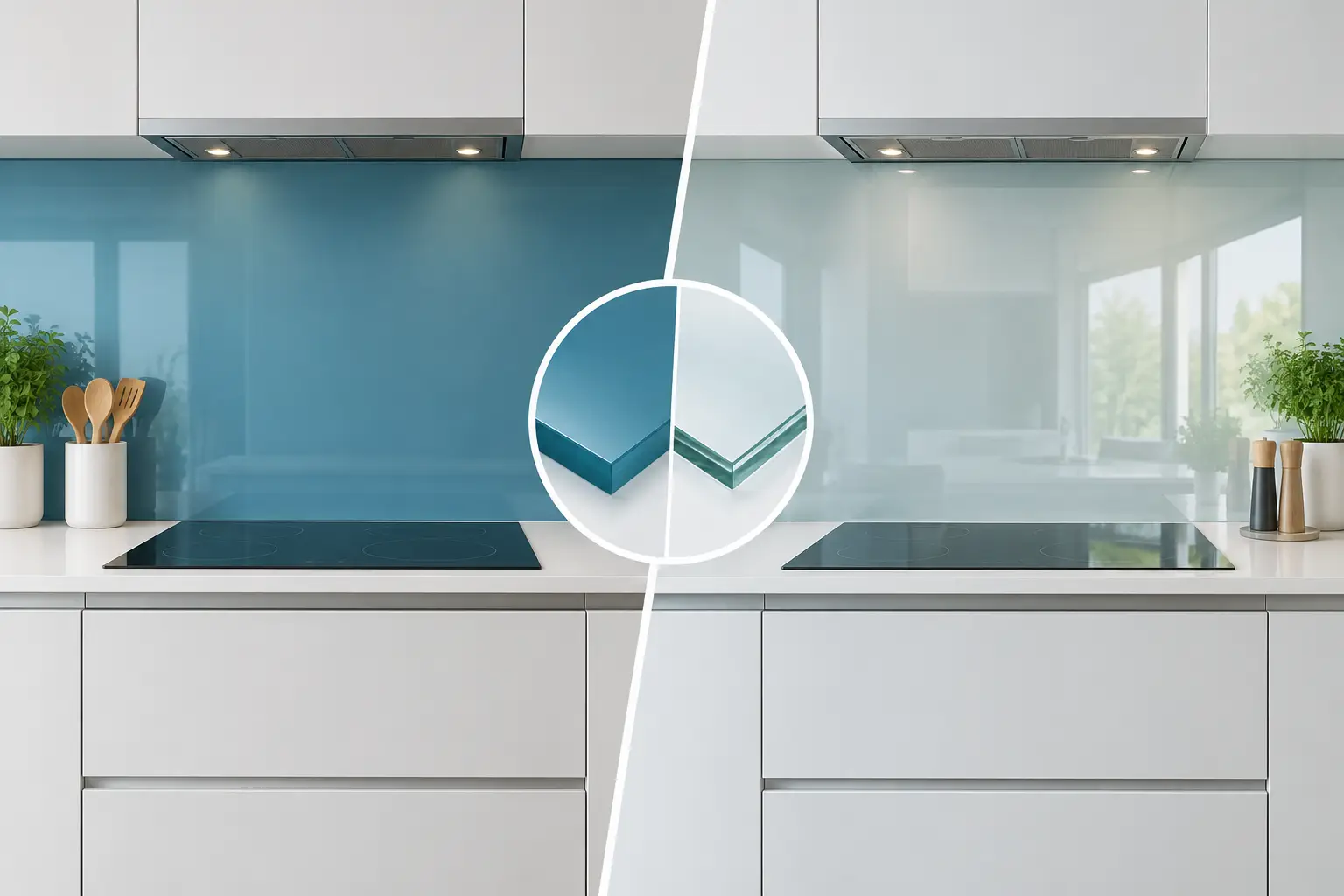
A splashback has a hard job to do. It needs to protect the wall from steam, sauces and everyday cooking, while looking right next to your worktops, cabinets and appliances. When comparing acrylic versus glass splashbacks, the best choice usually comes down to where it will be fitted, how you use the kitchen and how long you expect the finish to last.
Both materials can create a clean, contemporary look without grout lines. However, they perform very differently around heat, cut-outs and daily wear. For many kitchen projects, especially behind a hob, toughened glass is the more dependable long-term option. Acrylic can still be a sensible choice in the right area and at the right budget.
Acrylic splashbacks are lightweight plastic panels, often supplied in glossy colours, clear finishes or printed designs. They are easy to handle and can be an affordable way to update a utility room, bathroom or a section of kitchen wall away from direct heat.
Glass splashbacks are generally made from toughened safety glass. They are cut to the exact size required, polished at the edges and can be colour-backed to suit the room. A made-to-measure glass splashback feels more substantial and is designed for demanding kitchen locations, including the wall behind an induction, gas or electric hob when correctly specified and installed.
The difference is not simply one of appearance. Heat resistance, scratch resistance, fitting tolerances and the quality of the finished edges all matter once the splashback is on the wall.
If the splashback will sit directly behind a hob, glass is usually the clear choice. Toughened glass is made to cope with the temperature changes found in a working kitchen. It is also suitable around many heat-producing appliances when the required clearances and manufacturer guidance are followed.
Acrylic does not tolerate heat in the same way. It can soften, distort or discolour when exposed to high temperatures, particularly behind a gas hob. Even where an acrylic supplier allows use behind certain electric or induction hobs, the fitting guidance needs checking carefully. Heat rises and spreads, and a panel that looks fine at first may not be the best bet over years of cooking.
This is where a lower initial price can become a false economy. Replacing a damaged panel, dealing with an awkward cut-out or trying to match an older colour later can cost more than choosing the right material from the outset.
Acrylic can work well on other walls and as a matching upstand, provided it is kept away from the heat source. For the section immediately behind the cooker, a toughened glass panel gives greater reassurance. It is a practical combination for homeowners who like the look of acrylic but need a safe, durable centrepiece behind the hob.
Both materials can deliver strong colour, a high-gloss finish and a neat alternative to tiles. Acrylic tends to have a lighter feel and can be appealing for straightforward installations. It is available in a range of ready-made colours and effects, although choice may be limited by sheet sizes and standard ranges.
Glass offers more scope for a truly tailored result. Colour can be applied to the back of the glass, leaving the front face smooth, glossy and easy to wipe down. This means the finish is protected behind the glass rather than exposed on the surface. Whether the brief is a crisp white splashback, a dark dramatic tone, a soft neutral or a colour matched to a painted cabinet, bespoke glass provides more flexibility.
Glass can also be specified in clear, tinted, printed, mirrored or antique mirror finishes. That range is useful when the splashback is part of a wider interior scheme rather than simply a practical panel. A mirrored splashback, for example, can make a smaller Leeds terrace kitchen feel brighter, while a coloured glass panel can bring a calm, uninterrupted backdrop to a larger open-plan space.
Neither option requires the grout cleaning associated with tiled walls. A soft cloth, warm water and a suitable non-abrasive cleaner will deal with most cooking marks. The smooth surface of both acrylic and glass makes them a popular choice for busy family kitchens.
The difference becomes more noticeable over time. Acrylic is softer than glass, so it is more likely to pick up fine scratches from abrasive pads, harsh cleaning products or accidental contact with utensils. Dark acrylic finishes can show these marks more clearly, especially in bright light.
Toughened glass has a harder surface and stands up better to normal kitchen use. It can still be scratched if treated roughly, but it is generally the easier material to keep looking polished for years. For a household where the hob is used every day, that durability is worth considering.
Water spots and fingerprints can show on any glossy splashback, particularly black, mirrored or very dark finishes. This is an appearance issue rather than a performance problem. Choosing a colour with a little softness or movement can make day-to-day marks less noticeable than a highly reflective plain black panel.
Kitchen walls are rarely as straight as they appear. Sockets may sit close to cabinets, extractor positions can be slightly off-centre and worktops can vary by a few millimetres. A made-to-measure splashback allows for these details, rather than asking you to make a standard panel fit an individual space.
Glass requires accurate measurement before it is toughened. Once the toughening process is complete, it cannot be cut down or drilled. That is why careful measuring, correct templates and clear agreement on socket and fixing positions are so important. The reward is a clean fit with polished edges and neatly positioned cut-outs.
Acrylic is easier to cut on site, which may suit a simple DIY project. However, on a detailed kitchen with multiple sockets, unusual angles or a shaped worktop return, it can be harder to achieve the same crisp finish. It is also more prone to movement as temperatures change, so the correct fitting method and expansion allowance matter.
For non-standard sizes, shaped panels or an exact colour requirement, local manufacture is a real advantage. Yorkshire Glass produces bespoke glass in its Leeds workshop, allowing the team to work through practical details before the panel reaches site.
Acrylic is usually less expensive to buy and may be quicker to handle, particularly for a small, straightforward area. If you are refreshing a rental property, fitting a utility room or covering a wall away from a heat source, it can be a sensible budget-conscious option.
Glass usually costs more because it involves specialist processing, edge polishing, toughening and often bespoke colouring or cut-outs. It is heavier to transport and needs careful installation. Yet for a main kitchen splashback, it often offers better value over its working life because it resists heat and everyday wear more effectively.
It also helps to compare like for like. A low price for a standard-sized panel is not directly comparable with a precisely measured, toughened glass splashback with socket cut-outs, colour backing and installation support. The right question is not only what the panel costs today, but whether it suits the location and will still look good after years of use.
Choose acrylic when the panel is away from direct heat, the design is simple and keeping the initial spend down is the priority. It can give a smart, clean finish in low-risk areas, provided you are realistic about scratch resistance and heat limitations.
Choose toughened glass when the splashback sits behind a hob, needs several precise cut-outs, must match a particular colour or is intended as a long-lasting design feature. It is particularly well suited to kitchens where the splashback is a focal point rather than an afterthought.
If you are unsure, bring cabinet, worktop or paint samples to a showroom and look at them beside glass in natural and artificial light. A good splashback should fit the room precisely, cope with how you cook and make the finished kitchen feel properly considered.