
Leeds Glass Suppliers. Call our team on
Get A Fast Quote
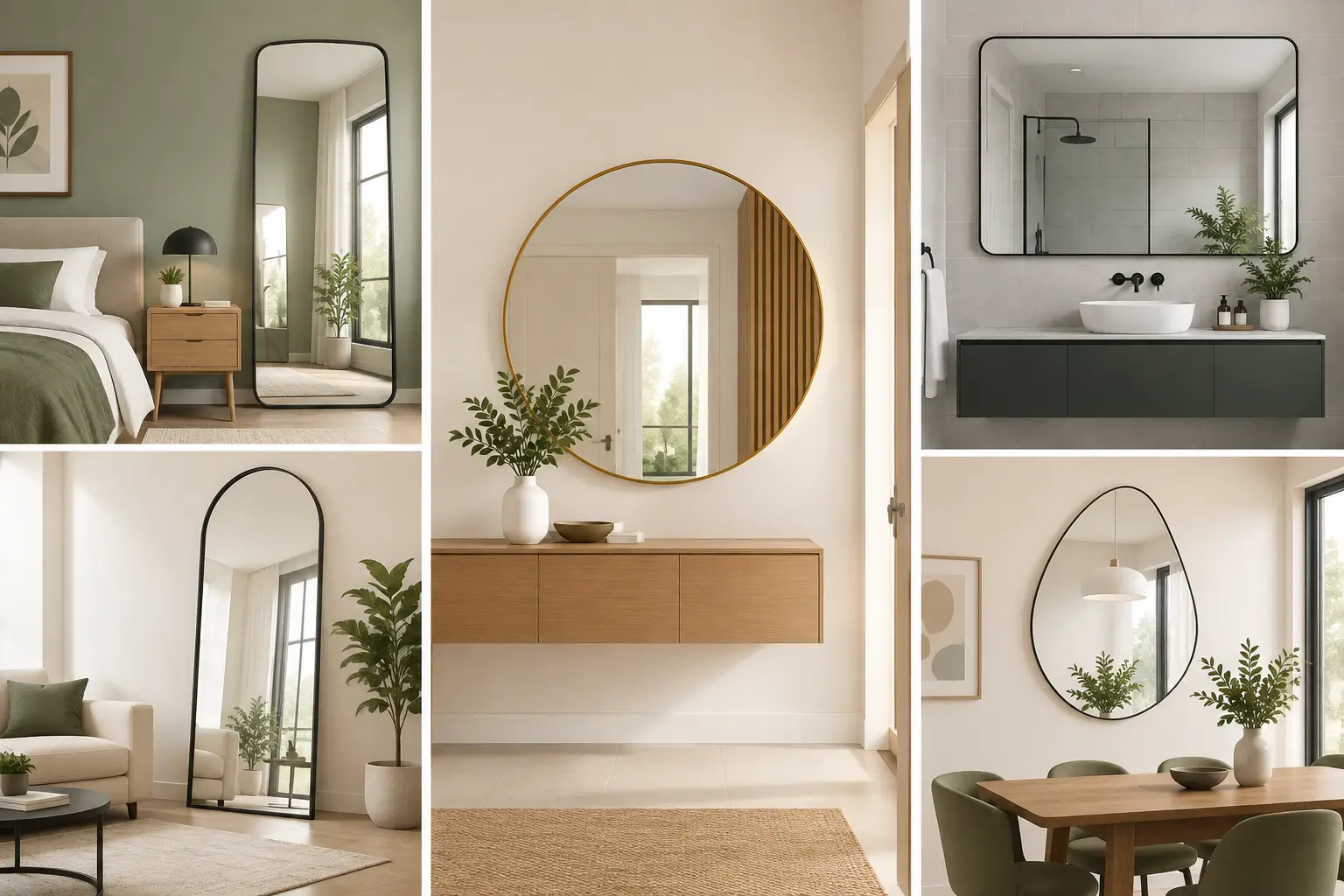
A mirror that is 20mm too narrow can leave an awkward strip of wall beside a vanity unit. One that is too tall may clash with a light fitting, socket or sloping ceiling. These are the small details that make made to measure mirrors worth considering: they are produced for the space you actually have, rather than asking you to redesign the room around a standard size.
For homeowners, that means a cleaner finish and more freedom with layout. For installers, joiners and designers, it means being able to specify the right dimensions, edgework and safety options from the start. A well-made mirror should look straightforward once it is in place, but getting there relies on accurate measurement and a clear brief.
Bathrooms are an obvious starting point. A mirror can be made to sit neatly above a basin, run the full width of a double vanity or fit between tiled returns. In smaller bathrooms, a larger mirror can make the room feel brighter and more open without taking up any floor space. The key is leaving sensible clearance around taps, lighting and wall-mounted accessories.
Bedrooms and dressing areas are another strong fit. A full-length mirror cut for a wardrobe door, alcove or narrow wall offers a far more considered result than a framed, off-the-shelf option. Where a room has uneven walls or a chimney breast, a bespoke size avoids the compromised gaps that often draw the eye afterwards.
Living spaces benefit too. A large plain mirror above a fireplace, sideboard or console table can reflect daylight into a darker part of the room. Antique and coloured mirror finishes can add character where a clear mirror would feel too sharp or modern. The best choice depends on the scheme: a bronze or grey tint can bring warmth and softness, while antiqued finishes create texture and interest.
Commercial interiors often have similarly exacting requirements. Reception areas, salons, restaurants and retail spaces may need multiple matching panels, cut-outs for fittings or unusually large sizes. In these settings, consistent manufacture and careful handling matter as much as appearance.
Before choosing a shape or finish, look closely at the area where the mirror will sit. Measure the width and height in more than one place, particularly in older properties where walls are rarely perfectly square. Note anything that affects the usable space, such as switches, sockets, extractor controls, wall lights, tiles, shelving or a ceiling slope.
It is also worth thinking about the visual line of the room. Above a vanity, should the mirror align with the basin, the unit or the full wall width? Over a fireplace, does it need to relate to the mantel, surrounding joinery or artwork nearby? There is no universal rule. A centred, narrower mirror can give a traditional and deliberate feel, while a wider design can make contemporary furniture look more integrated.
If the mirror is going into a recess, avoid assuming that one measurement is enough. Take the top, middle and bottom widths, then work from the smallest figure unless the opening is being altered. A template may be the sensible route for shaped walls, notches or complex cut-outs. This is one of those jobs where a quick site measure can prevent a costly and frustrating remake.
Rectangular mirrors remain the most versatile choice, particularly for bathrooms and fitted furniture. They suit most spaces, are easy to align with surrounding lines and can be made in large formats. That said, a change of shape can transform a room without adding visual clutter.
Round mirrors soften the straight lines of tiles, cabinetry and sanitaryware. Arched tops work well in hallways, bedrooms and period homes, while an irregular or shaped mirror can become a focal point in a more individual interior. The trade-off is practical: unusual shapes usually need more detailed specification, and fitting positions need to be agreed before manufacture.
Edge finish has a quiet but important effect. A polished edge gives a clean, bright outline and is a popular choice where the edge will remain visible. Bevelled edges create a more decorative border and catch the light, though they may not suit a very minimal look. If a mirror will be set into a frame, rebated into joinery or hidden behind tiles, the exposed edge requirement may be different.
For a modern bathroom or kitchen-adjacent space, a simple polished edge is often the right answer. In a traditional bedroom or feature wall, a bevelled or antique mirror can bring more depth. Samples are useful here because finishes react differently to natural light, wall colour and nearby metals.
The bathroom is not just another wall. Steam, splashes and daily cleaning all affect how a mirror should be specified and fitted. Placement is the first consideration. A mirror should sit at a useful height for the people using it, while staying clear of taps and allowing enough room for lighting.
Safety matters as well. Where a mirror is fitted in a location where impact is more likely, or where regulations and good practice call for safety glass, this should be discussed before ordering. Toughened or safety-backed options can be appropriate depending on the position and use. The right answer depends on the size of the panel, where it is fitted and what is nearby.
Fixing method deserves equal attention. Adhesive can give a neat, floating appearance, but the wall must be sound, flat and properly prepared. Visible screws or decorative fixings can make future removal easier and may be preferable for heavier mirrors or access requirements. A poor fixing can spoil even the best-cut mirror, so it should never be treated as an afterthought.
To keep the surface looking its best, clean with a soft cloth and a suitable glass cleaner. Avoid repeatedly soaking the edges, especially near baths, basins and showers. Good ventilation will also help reduce lingering condensation.
Clear mirror remains a classic for good reason: it maximises reflection and light. But it is not the only option. Antique mirrors have aged markings and variations designed into the surface, making them particularly effective as splashback-style feature panels, bar fronts, alcove backdrops and decorative wall sections. They add personality without requiring a busy pattern or heavily coloured finish elsewhere.
Coloured mirrors offer a more controlled alternative. Grey, bronze and other tinted effects can work with darker cabinetry, brass fittings, timber finishes and softer neutral palettes. They reflect the room, but in a less direct way than standard silver mirror. That can feel more relaxed in a bedroom or lounge, although it may be less practical where a bright, true reflection is the main requirement.
Large mirror panels can also be combined with other architectural glass. For example, a dressing room may use mirrored wardrobe doors alongside clear glass shelving, while a bathroom scheme may pair a bespoke mirror with a coloured glass splashback. Bringing samples together before finalising the order helps ensure the tones sit comfortably alongside one another.
When requesting a quote for made to measure mirrors, provide the overall dimensions, quantity, intended room, preferred shape and whether the edges will be visible. Mention any holes, cut-outs, notches, bevels or special finish requirements. A photograph of the wall or surrounding furniture can also be helpful, especially where there are unusual features.
For larger, heavier or more complex pieces, professional measuring and installation support can remove a great deal of uncertainty. Yorkshire Glass manufactures bespoke glass in its Leeds workshop, giving customers a practical route from initial idea through to a mirror cut to the agreed specification. It is particularly useful when a project involves awkward dimensions, coloured or antique finishes, or several panels that must line up precisely.
Do not leave the mirror until the final stage of a renovation if you can avoid it. Choose the position early, before electrical work, tiling and joinery are finished, so light fittings, sockets and fixing points can be planned around it. A few minutes spent checking the details at the beginning can make the finished room feel properly resolved.