
Leeds Glass Suppliers. Call our team on
Get A Fast Quote
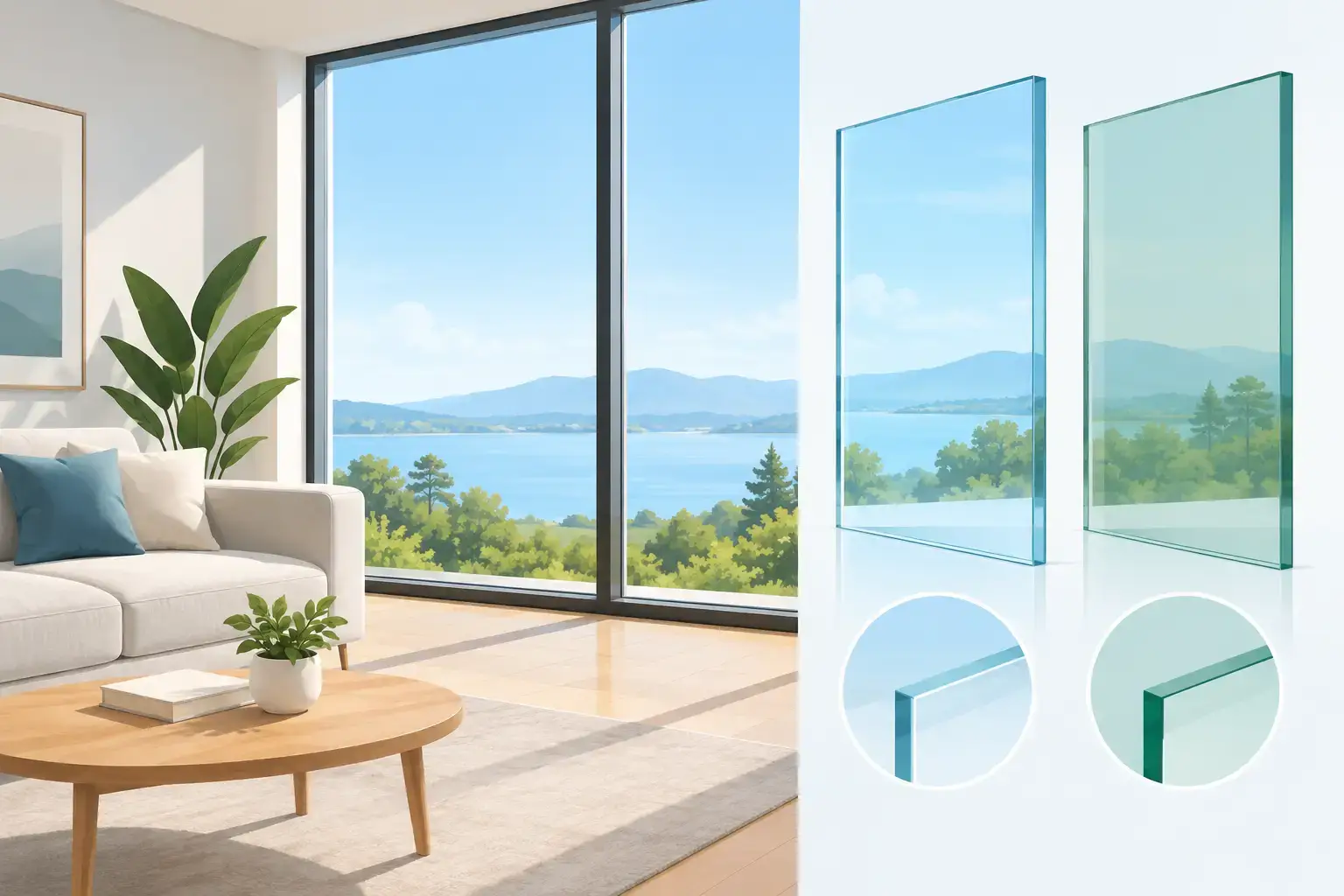
A bright white kitchen splashback can look slightly green at the edges when standard clear glass is used. The same can happen with a frameless shower screen or a glass shelf against pale tiles. When you choose low iron glass, you reduce that natural green tint and get a cleaner, more accurate finish - but it is not automatically the right choice for every project.
Low iron glass is often specified for contemporary interiors where colour, clarity and polished edges are all on show. It can make a real difference, particularly in a home built around whites, soft greys, light stone and crisp painted finishes. The key is knowing where the difference will be visible and where your budget is better spent on safety specification, fittings or a more complex bespoke shape.
Standard clear glass is made with small amounts of iron oxide in the raw materials. This is what gives its familiar green cast, most noticeable when looking through the glass or at a polished edge. It is not a fault. For many practical jobs, such as a clear table protector or a dark-coloured splashback, standard clear glass is an excellent and cost-effective option.
Low iron glass uses raw materials with much less iron content. It allows more light to pass through and appears clearer, with far less green at the edge. You may hear it described as extra-clear or ultra-clear glass. The exact appearance can vary slightly between manufacturers, so it is worth viewing a physical sample rather than relying on a screen image.
That improved clarity matters most when glass is being used as part of the design, rather than simply as a functional barrier. It helps white stay white, pale colours remain truer and metallic or printed details look closer to the intended shade.
The strongest reason to choose low iron glass is colour accuracy. If the glass sits in front of a light backing colour, or if you will see several exposed polished edges, standard glass can alter the finished look more than expected.
For painted glass splashbacks, low iron glass is usually the better choice for white, cream, pale grey, blush, light blue and other subtle shades. Standard clear glass can make these colours look greener or darker once the paint is applied to the reverse.
This is especially relevant for a white splashback paired with white quartz, marble-effect worktops or light cabinetry. The differences between warm white, cool white and off-white are often deliberate in a kitchen scheme. Low iron glass gives the chosen colour the best chance of matching the sample.
For black, navy, deep green or strongly saturated splashbacks, the visual benefit may be less pronounced. A standard clear toughened glass splashback can still produce an excellent result, so it is sensible to compare samples before paying for a specification you may not need.
A shower screen is one of the most popular uses for low iron glass because the edges and full thickness of the panel are easy to see. In a bright bathroom with white sanitaryware, pale porcelain or natural stone, the reduced tint helps the room feel lighter and more open.
The effect becomes more apparent with thicker glass. A substantial frameless panel has a larger exposed edge, so the green tone in standard glass can be more visible. Low iron glass gives that edge a clearer, more refined appearance.
Appearance is only one part of the decision. The panel must also be correctly toughened, measured and fitted with suitable hinges, channels or brackets. A beautifully clear shower screen that is poorly sized for an uneven wall or floor will not perform as it should.
Low iron glass can make a balustrade appear almost invisible, allowing more of a view, staircase or open-plan room to remain visible. It is a particularly good fit for glass balconies, internal staircases and landing barriers where light is a central part of the design.
However, do not let clarity take priority over the safety build-up. Balustrades need the right type and thickness of safety glass for the location, loading, fixing method and handrail arrangement. This may mean toughened glass, laminated glass, or a combination specified for the project. Low iron glass is an aesthetic choice within that safety requirement, not a substitute for it.
For a glass tabletop, shelf, cabinet door or display unit, low iron glass is worth considering when it sits over a light material or when its edges are prominent. It can prevent a pale timber, fabric or painted surface beneath the glass from taking on a greenish cast.
For a busy family table, a darker base or an area where edges are concealed, standard clear glass may be the more sensible option. The right thickness, edge finish and safety treatment will often have a greater effect on day-to-day use.
Glass thickness has a direct effect on how noticeable the green tint becomes. A thin piece of standard clear glass may show only a slight colour at the edge. In thicker pieces, the tint is stronger because you are looking through more material.
This is why low iron glass is commonly selected for 10mm or 12mm shower screens, balustrades and heavier table tops. A polished edge on standard clear glass can look distinctly green, while the same edge in low iron glass appears much clearer. If the edge will be hidden in a frame, channel or wall recess, that visual advantage may be less important.
Edge finishing still matters. A clean polished edge gives a smooth, professional finish for exposed glass, while an arrissed edge is lightly eased for safe handling where a decorative polished appearance is not required. Discuss where the edges will be seen before ordering, particularly on shaped splashbacks, shelves and furniture tops.
Low iron glass costs more than standard clear glass because of the material itself and, in some cases, availability for particular thicknesses or product types. On a large installation, that difference can be meaningful.
It is often money well spent on a feature splashback or a prominent frameless screen. It may be harder to justify for a utility-room splashback, a dark painted panel or glass with concealed edges. There is no benefit in specifying it simply because it sounds like the premium choice.
You should also consider what sits behind the glass. A printed design, mirror backing, textured wall or strong colour can all reduce the visible difference. Conversely, low iron glass can be the detail that prevents an otherwise carefully planned pale interior from looking slightly off.
If you are matching a kitchen splashback to cabinetry, a worktop or a paint sample, bring that reference with you where possible. Colours viewed on a phone or laptop are unreliable, and colours can look different under showroom lighting, daylight and warm under-cabinet lights.
A sample piece allows you to compare standard clear and low iron glass side by side. Look at both the face of the glass and the polished edge. Place it near the worktop, tiles or door sample rather than judging it in isolation.
For painted splashbacks, the glass must be toughened before it is painted where heat resistance is required, such as behind a hob. Any cut-outs, socket holes and shaped corners need to be agreed before toughening, as toughened glass cannot be cut or drilled afterwards. Accurate measurements and a clear template are essential.
Before confirming your glass, establish whether the colour is pale enough for edge tint to matter, whether the edges will be exposed, and whether the thickness makes the difference more visible. Then confirm the safety specification for the location, especially around heat, water, stairs and raised surfaces.
It also helps to ask how the piece will be measured, manufactured and installed. Bespoke glass allows for unusual wall conditions, socket positions, notches and cut-outs, but each detail should be resolved before production. A local workshop can be particularly useful when a project needs a site visit, sample comparison or a practical answer to a non-standard opening.
Yorkshire Glass manufactures made-to-measure glass in Leeds and can help compare options for splashbacks, shower screens, balustrades and interior glass features. Bringing along photographs, dimensions and material samples gives the team a useful starting point for a fast, accurate recommendation.
The best choice is the one that looks right in the room and is properly specified for how it will be used. If a pale finish, exposed edges or a light-filled space are central to your plans, ask to see low iron glass beside standard clear glass before making the final call.