
Leeds Glass Suppliers. Call our team on
Get A Fast Quote
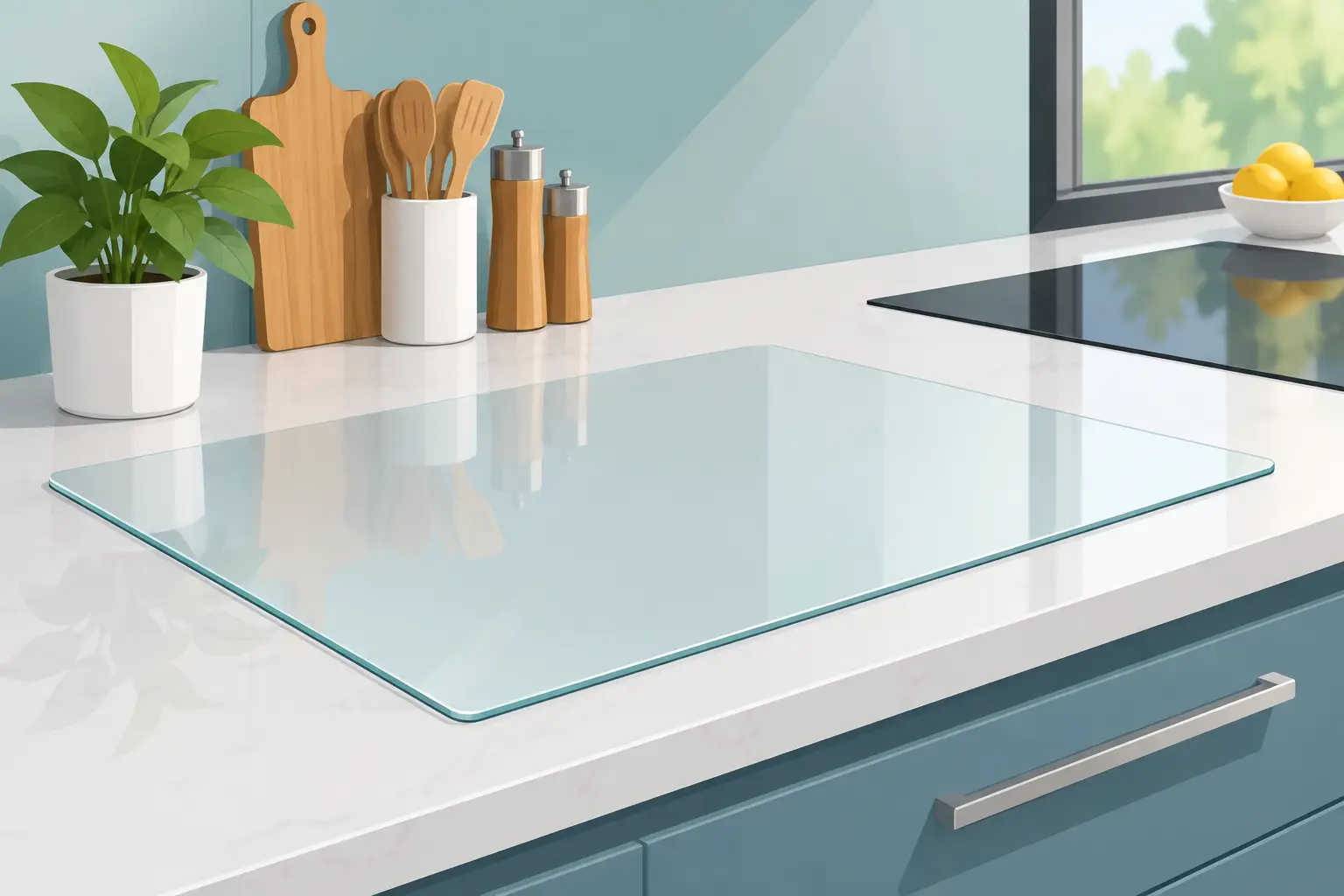
A kitchen worktop can look tired long before the cabinets do. Knife marks, staining around the kettle, scratches from pans and everyday spills all leave their mark. A glass worktop protector creates a hard-wearing, easy-clean surface exactly where you need it, while allowing the colour and character of the worktop beneath to remain visible.
For homes across Leeds and Yorkshire, it is a practical option when replacing a full worktop would be unnecessary or disruptive. The right piece of toughened glass can protect a favourite timber surface, provide a clean preparation area on stone or laminate, or add a polished finish to a utility room, bar or dressing table.
A glass worktop protector is a cut piece of safety glass designed to sit on top of an existing work surface. It can cover one busy section, such as the area beside a hob or sink, or be made to suit a larger worktop run. Unlike a loose chopping board, it gives you a flat, substantial surface that is simple to wipe down and does not absorb oils, food colouring or moisture.
Most made-to-measure protectors are manufactured from toughened safety glass. This is glass that has been processed to improve its strength and safety performance. Should it break under exceptional impact, it is designed to fragment into small, less hazardous pieces rather than large sharp shards.
The glass can be clear if the aim is to preserve the look of the surface below. It can also be supplied in a chosen colour, with a frosted or satin effect where a softer appearance or more privacy is wanted. For a kitchen, clear glass is often the most understated choice, especially over a distinctive oak, marble-effect or patterned worktop.
Glass has a crisp, non-porous finish that suits hardworking kitchens. Tomato sauce, turmeric, oil and coffee can be wiped away without the staining associated with some timber boards or unfinished stone. It also does not harbour odours, which is useful where the same area is used for food preparation every day.
Its main advantage is that it protects without hiding the worktop. A beautiful timber grain, a quartz pattern or a painted surface can still be seen through clear glass. If the existing worktop is sound but vulnerable, that can be a far more economical route than a full replacement.
There are trade-offs. Glass is not a substitute for sensible kitchen use. Heavy objects should not be dropped onto an exposed edge, and a glass surface can show crumbs, water spots and fingerprints more readily than a heavily textured laminate. A quick wipe with a soft cloth keeps it looking its best, but it is worth knowing what to expect before choosing a high-gloss finish.
A protector works best when it is specified around the way the space is actually used. Size, edge finish, thickness and the condition of the existing worktop all matter.
Think about the points where damage tends to happen. Some homeowners want a compact glass board beside the hob for preparing ingredients. Others need to protect the surface beneath a coffee machine, mixer, pet bowls or a frequently used air fryer. In a utility room, a larger glass top can make a practical folding or sorting surface.
Measure the length and depth of the required area carefully, but do not assume it must be a plain rectangle. A made-to-measure piece can accommodate corners, angled ends, curves and cut-outs where the design allows. This is particularly useful in older Yorkshire homes, where walls and fitted units are not always perfectly square.
For a worktop application, toughened safety glass is the sensible choice. The suitable thickness depends on the size of the panel, the support beneath it and how the surface will be used. A small protector fully supported by a level worktop has different requirements from a long glass top spanning between cabinets.
The existing surface must also be flat and stable. Glass should be evenly supported rather than resting on a high spot or bridging a gap. If the worktop is bowed, damaged or poorly fitted, resolve that issue first. Accurate advice at the quotation stage can prevent a good-looking piece of glass from being put under unnecessary stress.
Polished edges are an essential finishing detail for exposed glass. They remove the sharpness of a cut edge and provide a clean, professional look. Softened or rounded corners are also worth considering, especially in a busy family kitchen or on a projecting breakfast bar.
A square corner may suit a neat contemporary layout. A small radius on each corner is often more forgiving in a tight walkway, where hips, bags and chairs regularly pass. It is a small decision that makes a noticeable difference in daily use.
Clear glass is ideal when the worktop itself is the feature. It is also flexible if you later repaint cabinets or change accessories, as it will continue to work with a new scheme.
Coloured glass can turn a simple protector into a design feature. A dark shade can give a pale kitchen stronger contrast, while a light neutral can brighten a utility or pantry area. Satin glass reduces reflections and can disguise minor marks better than a fully clear, glossy surface, although it changes the view of the material beneath.
Samples are useful here. Colours and textures can look very different under warm kitchen lighting than they do in a showroom or on a screen.
A glass worktop protector may be laid directly onto a clean, level worktop, sometimes with small clear protective pads or discreet fixings to prevent movement and protect the surface below. The best method depends on whether the panel needs to be removable, how large it is and whether there is any risk of trapped moisture.
For example, a removable panel can be useful where you want occasional access to a timber worktop for treatment or cleaning. A more permanent arrangement may be better for a large, frequently used area. Either way, the glass should sit securely without rocking.
Avoid using a glass protector as a direct chopping surface. Although toughened glass is durable, repeated knife use can blunt blades and leave fine scratches over time. Use a chopping board for food preparation, and let the glass do the job it is designed for: protecting the worktop underneath.
Care is straightforward. Wipe spills promptly with a soft cloth and warm water, then dry with a clean microfibre cloth to reduce streaks. Avoid abrasive pads, harsh scouring powders and sharp metal tools around the edges. If food or residue gets beneath a removable piece, lift it carefully with help if needed, clean and dry both surfaces, then replace it.
Off-the-shelf glass boards can be useful for a temporary solution, but they rarely fit the space properly. They may leave an awkward exposed strip, move around during use or fail to suit a corner, recess or unusual worktop depth.
A made-to-measure glass worktop protector is specified for the actual dimensions of the room. That includes clearances around walls, appliances and upstands, as well as the finish that suits the rest of the kitchen. For larger or more unusual pieces, a site measure is often the safest way to ensure the final panel fits as intended.
Yorkshire Glass manufactures bespoke glass in Leeds and can help homeowners, joiners and installers work through details such as sizes, shapes, polished edges and suitable safety glass. Bringing measurements, photographs and, where possible, a worktop sample makes the conversation quicker and more accurate.
Before ordering, consider what you want the glass to protect, how often the area is used and whether you want the worktop beneath to remain on show. With those answers in place, a properly specified piece becomes a useful part of the kitchen rather than another item to move out of the way.