
Leeds Glass Suppliers. Call our team on
Get A Fast Quote
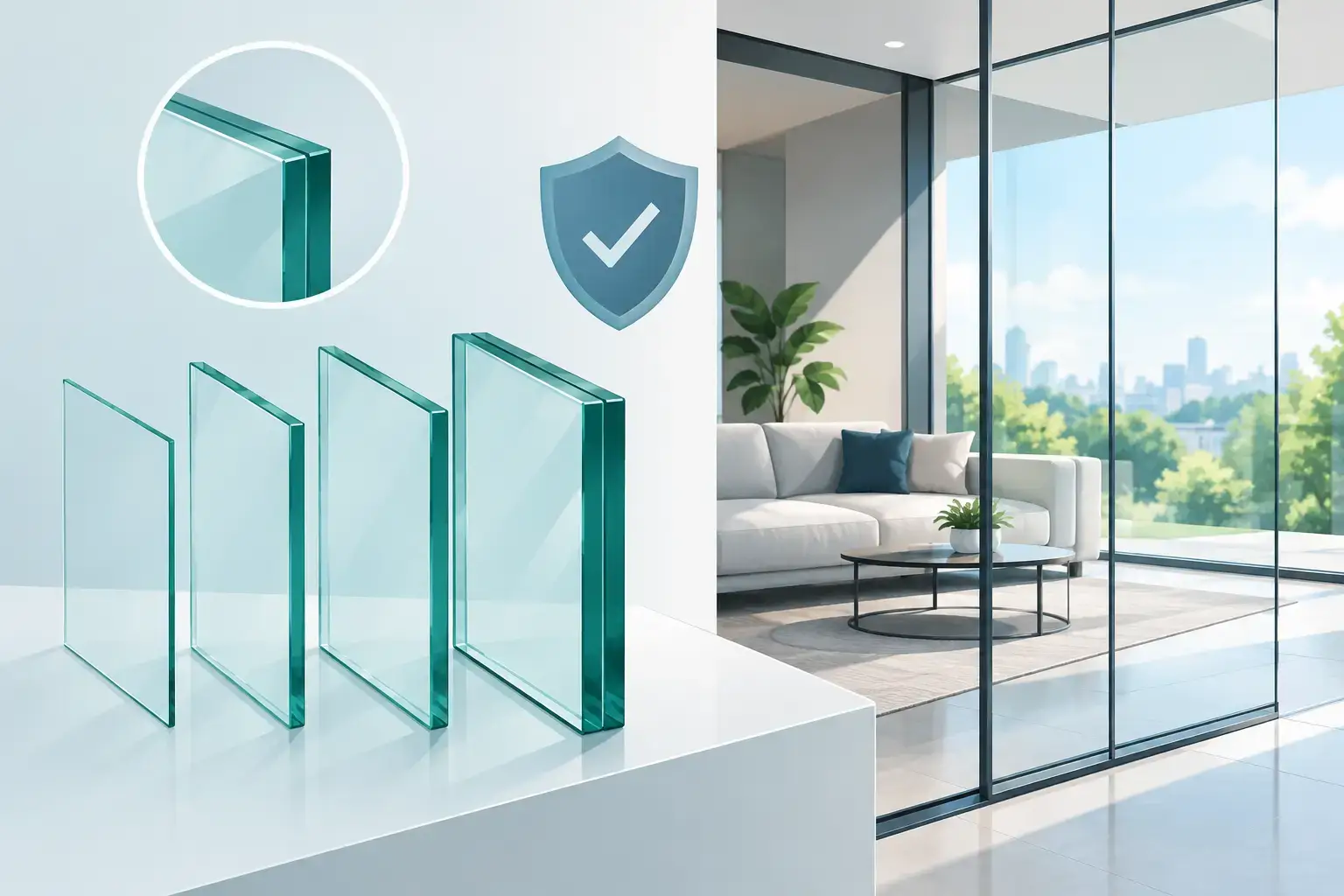
A slim sheet of glass can look beautifully understated in a kitchen or bathroom, but the wrong specification can cause real problems later: excessive flex, unsuitable fittings, awkward handling or, most seriously, a safety risk. Good glass thickness selection starts with what the glass needs to do, not simply what looks right from the front.
For a small decorative panel, a lighter specification may be perfectly suitable. For a frameless shower screen, a glass table top or a balustrade protecting a change in level, thickness is only one part of a much bigger safety decision. The glass type, its dimensions, edge finish, fixing method and the loads it will face all matter.
The first question is whether the glass is decorative, protective, structural or a combination of all three. A coloured kitchen splashback mainly needs to withstand heat and everyday knocks. A shower screen must be strong enough for repeated use, work with the chosen hinges or channels and sit squarely in the opening. A balustrade has to resist people leaning against it and prevent a fall.
That difference is why there is no single “best” glass thickness for every room. Thicker glass is not automatically safer if it is paired with the wrong fittings or installed without the correct support. Equally, specifying more thickness than a project needs can add unnecessary weight, cost and handling difficulty.
A made-to-measure approach helps because the finished size is known before the glass is manufactured. This is particularly useful in older Yorkshire homes, where walls, floors and reveals are rarely as straight as the drawings suggest.
Toughened glass is commonly used for kitchen splashbacks, particularly behind a hob, because it is designed to cope with heat and impact better than ordinary annealed glass. The required thickness will depend on the panel’s size, how it is fixed and where it is positioned.
For most splashbacks, the practical concerns are accurate templating, safe cut-outs for sockets and switches, and allowing for the wall surface. All drilling and shaping must be completed before toughening, so measurements need checking carefully. A slightly uneven wall can also influence the fixing method and the final appearance, especially with a painted or digitally printed back.
Choosing a thicker panel may give a more substantial feel, but it will not correct a poor wall or an inaccurate template. The best result comes from matching the glass and installation method to the actual site conditions.
Frameless shower glass has a clean, high-end look because the glass itself does much of the visual work. It also carries more responsibility. The panel needs to be toughened safety glass, correctly sized for the opening and compatible with the hinges, stabilising bars, channels and seals being used.
Thickness affects rigidity. A wider fixed panel or a hinged door may need a specification that limits movement in day-to-day use. Yet the heaviest option is not always the right one: hinges and wall fixings have their own load limits, and a heavier door can be less forgiving if the walls are not suitable for secure fixing.
For this reason, shower screen glass should be specified as a complete system. Provide the opening dimensions, whether the panel is fixed or hinged, the location of walls and tray, and the preferred fittings. That gives the fabricator enough information to advise on a practical, safe solution rather than guessing from a single measurement.
Balustrades are not a place for rule-of-thumb decisions. They may be nearly invisible when finished, but they are safety barriers and must be designed around the particular layout, height, fixing arrangement and use of the space.
Many balustrades use laminated safety glass, often with toughened panes within the laminate. If one pane breaks, the interlayer helps retain the glass in place. The final build-up and thickness depend on whether the glass is held in a base channel, fixed with clamps or point fixings, framed around the edge, or required to perform with minimal support.
Internal stairs, landings, terraces and commercial settings can all have different loading requirements. For any balustrade, the specification should be confirmed for the project rather than copied from another installation that happens to look similar. This is one area where drawings, site details and professional advice are essential.
A glass top can protect a timber dining table, add a polished finish to a sideboard or create a practical surface for a desk. Here, thickness is influenced by span, support and intended use. Glass laid fully on a solid surface behaves very differently from glass bridging a large gap between supports.
Toughened safety glass is often a sensible choice for regularly used tops. Polished edges reduce sharpness and create a finished appearance, while rounded corners can be worthwhile in busy family spaces. If the glass will sit on a painted surface or natural timber, discreet pads can help prevent rattling and allow for minor movement.
A lightweight top may suit a small bedside table, whereas a large dining table needs more consideration. Think about where people will rest their hands, whether chairs may knock the edges, and how the glass will be lifted for cleaning.
Mirror thickness is usually chosen for flatness, size, handling and the intended mounting method rather than impact resistance alone. A small mirror can often be straightforward to fit, while a large, full-height piece needs proper assessment of the wall, fixing system and access route into the property.
Antique-effect and coloured mirrors add another consideration: their finish can change the way light moves around a room. The thickness should support a crisp, stable installation without making the mirror unnecessarily heavy for the wall or furniture it is fitted to.
Dimensions matter as much as thickness. A narrow strip of glass and a broad panel may be made from the same material, yet their behaviour under pressure will be very different. The larger the unsupported area, the more likely flex becomes relevant.
Edge treatment also has a role. A polished edge is ideal where the glass remains visible, such as a shelf, table top or shower panel. A simpler edge finish may be suitable where it will be concealed in a frame or channel. Holes, notches and cut-outs need careful positioning because they can affect the way stress is distributed through the glass.
Then there is the question of weight. Glass is heavier than it looks, and every increase in thickness affects transport, lifting, wall fixings and installation. This does not mean avoiding thicker glass where it is needed. It means allowing for it properly from the outset, particularly for large mirrors, stair panels and oversized shower screens.
In locations where people may fall against glass, where glass is close to floors and doors, or where breakage could cause injury, safety glazing requirements need careful attention. Toughened glass breaks into small granular pieces, while laminated glass is designed to hold fragments together after breakage. They serve different purposes, and one is not simply a substitute for the other.
The right choice depends on the application. A shower enclosure may call for toughened glass. A barrier or overhead application may need the retained-fragment performance of laminated glass. Building regulations and relevant standards can apply, especially for balustrades, doors, screens and commercial work, so the specification should be checked before manufacture.
When requesting a quote, share more than width and height. A quick sketch, photographs of the area and details of the surrounding walls, furniture or fittings can prevent costly assumptions. Say how the glass will be used, whether it needs holes or cut-outs, and whether you need supply only, delivery or fitting support.
For complex work, a site measure is often the sensible next step. It can reveal uneven walls, restricted access, hidden services and fixing challenges before glass is cut. As glass cannot usually be altered after toughening, getting this stage right protects both the finish and the budget.
Yorkshire Glass manufactures bespoke glass in Leeds, so the team can assess unusual sizes, shapes, colours and reinforced specifications with the project in front of them, rather than trying to make a standard stock panel fit.
If you are choosing between two options, do not decide on thickness alone. Bring your plans, measurements or photos to a conversation with a glass specialist. A few practical questions before manufacture can lead to glass that feels right in the room, fits accurately and performs as it should for years to come.