
Leeds Glass Suppliers. Call our team on
Get A Fast Quote
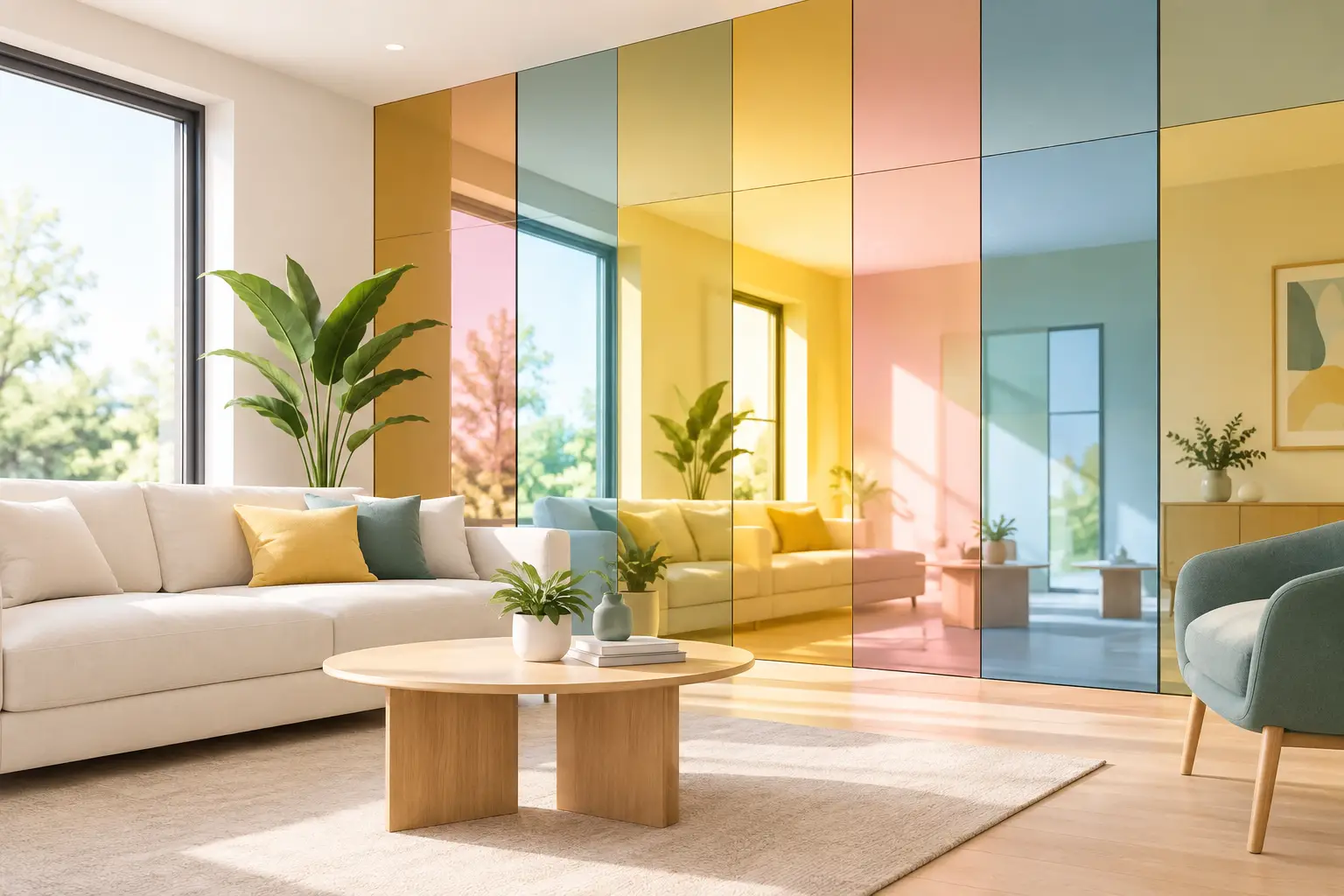
A wall does not have to be plain to feel calm. The right coloured mirror wall panels can make a narrow hallway feel wider, bring warmth to a dining area or add a refined focal point behind a bed, bar or console table. Unlike a painted feature wall, mirrored glass changes through the day, picking up natural light, lamps and the colours already present in the room.
The key is choosing the right shade, size and installation detail for the space. A coloured mirror should feel considered rather than overpowering, and a made-to-measure approach gives you far more control than trying to work around standard panel sizes.
Coloured mirror is a decorative glass with a reflective backing and a tinted face or finish. It offers the visual depth of a mirror without the hard, bright reflection of a conventional silver mirror. Depending on the colour and lighting, it can appear smoky, warm, muted or lightly reflective.
Bronze and grey are popular choices because they sit comfortably alongside many interiors. Bronze mirror can soften white cabinetry, dark timber and warm metallic fittings, while grey or smoke mirror works particularly well with black frames, stone surfaces and contemporary neutral schemes. Antique-style finishes introduce more movement and character, which can be useful where a perfectly even reflection would feel too formal.
The benefit is not simply decorative. Mirror panels bounce light into darker parts of a room and give the impression of greater depth. In a compact property, that can make a genuine difference. In a larger room, they can help connect separate areas and make a carefully planned interior feel more layered.
There is a trade-off. Highly reflective panels show what is opposite them, so the view matters. If a mirror will reflect an attractive pendant, garden outlook or textured wall, it earns its place. If it faces clutter, a television screen or harsh downlights, a subtler tinted or antique finish may be the better option.
Coloured mirrors are versatile, but they work best when they have a clear purpose within the layout. A full wall can look striking, although a smaller, well-positioned panel is often all that is needed.
Behind a sideboard or dining table, a bronze or grey mirror panel creates a sense of depth without making the room feel like a salon. It can also reflect a statement light fitting, giving the room more presence in the evening. For open-plan areas, a mirrored section can define a dining zone while keeping the space visually open.
Consider the height of furniture and sockets before deciding on panel dimensions. Taking a panel from worktop level to ceiling can look clean and intentional, but a carefully sized section above a sideboard may suit a more traditional room.
Tinted mirror is a practical alternative to a plain feature wall behind bedside tables or across wardrobe doors. The softer reflection of bronze, grey or antique mirror feels less stark first thing in the morning than clear mirror. It also works well as a made-to-measure insert within fitted joinery, where accurate sizing and neat edge finishing are essential.
For a wall behind a bed, think about where bedside lights, switches and artwork will sit. A panel can be cut around these details, but it is better to plan them early so the finished arrangement looks purposeful.
These are often the darkest parts of a home, yet they benefit most from reflected light. A tall panel near a front door or on a landing can brighten the route through the house and provide a useful last look before heading out. Grey mirror is especially effective where you want the space to feel smarter without adding a strong warm tone.
Staircases need careful measuring and safe handling. Access, wall condition and fixing method all need to be considered before a large piece is made.
A coloured mirror can make a distinctive splashback or bar front, particularly in an entertaining space. However, this is not a case of choosing by appearance alone. Behind a hob, the glass specification must be suitable for heat exposure, and cut-outs for sockets need to be accurately positioned before manufacture. For kitchens, toughened safety glass may be required depending on location and design.
In cafés, salons, restaurants and retail settings, coloured mirror can add depth without taking up valuable floor space. Large commercial panels usually need a clear survey, a practical installation plan and careful coordination with other trades.
Start with samples in the room where the glass will be fitted. Showroom lighting is useful, but daylight, wall colour and nearby materials can change how a mirror reads. A bronze panel beside cool white paint may look richer than expected; a grey panel alongside pale stone may look almost silver in bright daylight.
Look at the undertones already in the room. Warm oak, brass, cream and earthy tiles generally sit well with bronze or antique finishes. Black, charcoal, concrete-effect surfaces and chrome often suit grey or smoke mirror. This is guidance rather than a rule. A contrasting shade can be very effective when it is repeated elsewhere, perhaps in handles, lighting or furniture.
Panel layout matters as much as colour. One large panel gives a cleaner, more contemporary result, while several sections can suit a wall with architectural features or make handling easier. Where joins are necessary, position them deliberately. A joint centred on a doorway or lined up with a furniture edge will look far better than one that appears accidental.
Mirrored glass is a precision product. Before ordering, decide whether the panel will be face-fixed, fitted into a frame or bonded to a prepared surface. The wall needs to be flat, dry and sound. Uneven walls can create stress in the glass or leave an unsightly gap at the edges.
Accurate measuring is particularly important where panels meet cabinetry, stone worktops, skirting boards or metal trims. Even a small discrepancy can be noticeable because straight reflective edges draw the eye. For larger or awkward installations, a site measure is usually the sensible route.
Also consider these practical points before finalising a design:
A local glass specialist can help turn these details into a workable specification, rather than leaving your installer to solve them once the glass arrives. Yorkshire Glass manufactures bespoke mirrors and decorative glass in its Leeds workshop, so unusual dimensions, cut-outs and panel arrangements can be discussed before production begins.
For everyday cleaning, use a soft microfibre cloth and a small amount of glass cleaner applied to the cloth rather than directly onto the panel. Avoid abrasive pads, scouring products and excessive moisture around edges or joins. These can damage the surface or affect the backing over time.
In bathrooms or other humid rooms, good ventilation is essential. The right product and installation method depend on exactly where the mirror is going, especially near showers, basins and heated areas. It is worth raising this at the quotation stage rather than assuming all decorative mirror is suitable for every wet location.
A coloured mirror wall should feel like part of the room, not an afterthought. Bring a photo, a paint sample or a cabinet door into the showroom, talk through the wall and the lighting, and choose a panel that will look just as good on an ordinary Tuesday as it does when the room is newly finished.