
Leeds Glass Suppliers. Call our team on
Get A Fast Quote
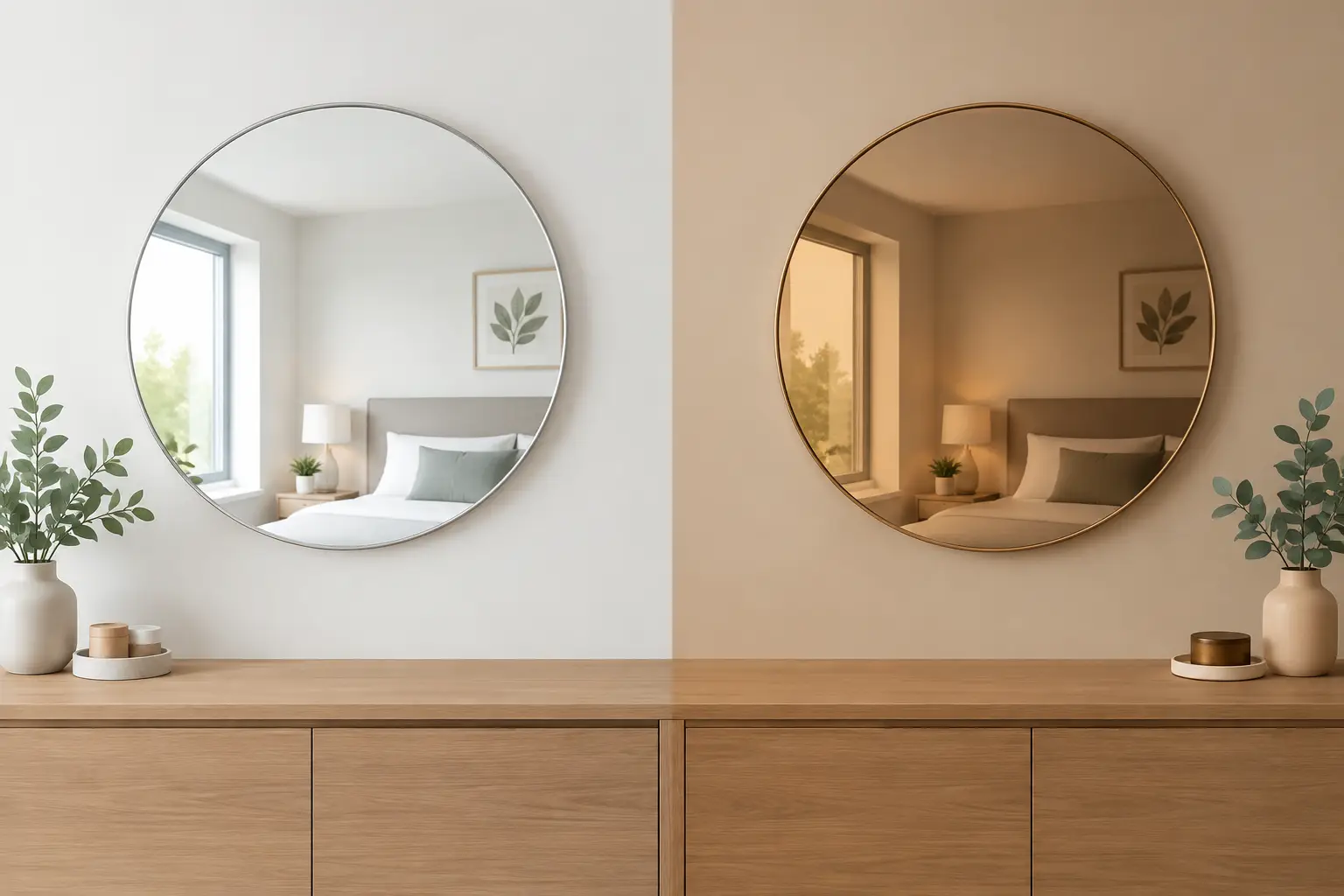
A mirror can change a room more than most finishing touches. It affects how large the space feels, how natural light travels and whether the overall look is crisp, soft or dramatic. When weighing up clear versus bronze mirrors, the best choice is rarely just about which one looks nicest on a sample. It is about the light in your room, the colours around it and how you want the space to feel every day.
Clear mirror is the familiar choice, but bronze mirror has become a popular option for bedrooms, bathrooms, living rooms and feature walls. Both can be made to your exact size and shape. The difference lies in the character they bring once they are fitted.
A clear mirror provides a clean, neutral reflection. It shows colours close to how they appear in real life and reflects available light efficiently. In a smaller or darker room, this can make a noticeable difference, particularly when the mirror is positioned opposite or beside a window.
Bronze mirror has a warm brown-grey tint in the glass and reflected image. It still works as a proper mirror, but it gives the room a softer, more considered appearance. Think less bright and sharp, more relaxed and luxurious. It often sits particularly well with warm metals, timber, stone and deeper painted colours.
Neither is automatically better. Clear mirror is usually the practical choice where brightness and an accurate reflection matter most. Bronze is often selected when the mirror is also intended to be a design feature.
Clear mirror is highly versatile because it does not introduce another obvious colour into the scheme. It suits contemporary interiors, traditional homes and everything between. If you are unsure of future decorating plans, it is generally the safer long-term option.
In bathrooms and dressing areas, clear mirror remains the most functional choice. It gives a more faithful reflection for shaving, applying make-up or getting ready in the morning. A large clear mirror above a vanity unit can also make a compact bathroom feel more open without competing with the tiles, brassware or wall finish.
It is equally effective in hallways, where reflected daylight can brighten a narrow entrance, and in kitchens, where a mirrored splashback or panel can bring extra depth to the room. However, its brightness can also highlight visual clutter. A clear mirror opposite open shelving, a busy worktop or an untidy corner will reflect it straight back into the room.
Clear mirror works especially well when you want the room to feel:
Bronze mirror is valued for atmosphere. The tint takes some of the coolness out of reflected light, helping a room feel warmer without making it dark. In the right setting, it creates depth and a softer level of contrast than standard clear mirror.
This makes bronze a strong choice for bedrooms, dining rooms, lounges and feature joinery. A bronze mirrored panel behind bedside tables, within fitted wardrobes or along a chimney breast can look refined without feeling overly glossy. It also pairs naturally with walnut, oak, black cabinetry, smoked glass, aged brass and bronze fittings.
In a bathroom, bronze mirror can be very effective above a dark vanity unit or against natural stone-effect tiles. The key consideration is lighting. In a bathroom with a generous window and good task lighting around the basin, the warm tint can look elegant. In a small, poorly lit bathroom, it may make the room feel more enclosed than clear mirror would.
Bronze mirror is not simply a brown version of clear mirror. It changes the balance of a scheme. Pale greys may look warmer in its reflection, while bright white walls can appear softer. That is often exactly the point, but it is worth seeing a sample against your actual finishes before committing.
The amount and direction of natural light should guide your decision. North-facing rooms tend to receive cooler, gentler light. A bronze mirror can add welcome warmth here, particularly alongside warm white paint, timber and layered lighting. Yet if the room is already quite dim, clear mirror may give you more useful reflected brightness.
South-facing rooms receive stronger light for much of the day. Clear mirror can make these spaces feel particularly bright, sometimes to the point of glare if it faces a large window directly. Bronze mirror can soften the effect and give a sunny room more visual calm.
Room size matters too. Clear mirror is excellent for creating a sense of extra space in a narrow hallway, compact cloakroom or smaller en-suite. Bronze can still be used in these rooms, but a full wall of dark-toned mirrored glass may feel more dramatic than expansive. A smaller bronze feature or a combination of bronze and lighter finishes can be a better balance.
Consider what will be reflected as carefully as the mirror itself. A bronze mirror facing pendant lights, a fireplace or a well-finished piece of furniture can create a rich layered look. A clear mirror opposite a window can make the most of a view. The reflection is part of the design, not an afterthought.
Clear mirror is often the first choice for practical bathroom mirrors, wardrobe doors, hallway mirrors and full-length dressing mirrors. It also works well behind furniture where you want to increase light without changing the colour mood of the room.
Bronze mirror suits decorative applications particularly well. It can be used for wardrobe panels, alcoves, cabinet fronts, bar areas, living room features and bedroom wall panelling. In kitchens, bronze mirrored splashbacks can offer a warmer alternative to standard mirror behind a hob or worktop. For these applications, the glass specification needs to be suitable for the location and correctly measured around sockets, cut-outs and fixing points.
A mixed approach can be effective in larger projects. For example, clear mirror may be best in a main bathroom where daily use is the priority, while bronze mirror can give fitted bedroom furniture or a downstairs cloakroom more personality. Matching every reflective surface is not essential. Choosing each one for its job usually produces a better result.
The colour is only one part of specifying a made-to-measure mirror. Thickness, edge finish, safety backing, shape and fixing method all affect the finished result. A simple polished edge works beautifully for many wall mirrors, while bevelled edges can add a more traditional detail. For a contemporary feature, a shaped or oversized panel with neat, minimal fixings may be more appropriate.
Where a mirror is going into a bathroom, behind a hob or in a busy family area, ask about the right safety specification. Toughened glass, laminated products or safety-backed mirrors may be appropriate depending on the position and intended use. A professional survey is useful where walls are uneven, units are already fitted or the mirror needs to meet tiles and cabinetry precisely.
Accurate sizing is particularly important with bronze mirror because it is often used in joinery and feature wall layouts. A small gap, poorly placed socket cut-out or misaligned joint stands out on a reflective surface. Made-to-measure manufacture allows the mirror to be produced around the actual conditions on site rather than forcing the room to suit a standard size.
At Yorkshire Glass, mirrors are made in our Leeds workshop, so our team can help you compare samples, check practical details and specify a piece that suits the room rather than a catalogue image. This is especially useful for unusual shapes, large panels and projects involving several finishes.
Photographs are useful for ideas, but they cannot show exactly how bronze glass will respond to your lighting or how clear mirror will reflect the colours in your home. A sample viewed beside your paint, tiles, cabinetry and fittings gives a far more reliable answer.
If your room needs more daylight, a clear and accurate reflection, clear mirror is likely to be the right starting point. If the room already has enough light and you want more warmth, depth and a distinctive finish, bronze may be the detail that brings the scheme together. Pop in with a few photos or finish samples, and choose the mirror that will still feel right when the room is lived in, not just when it is newly fitted.