
Leeds Glass Suppliers. Call our team on
Get A Fast Quote
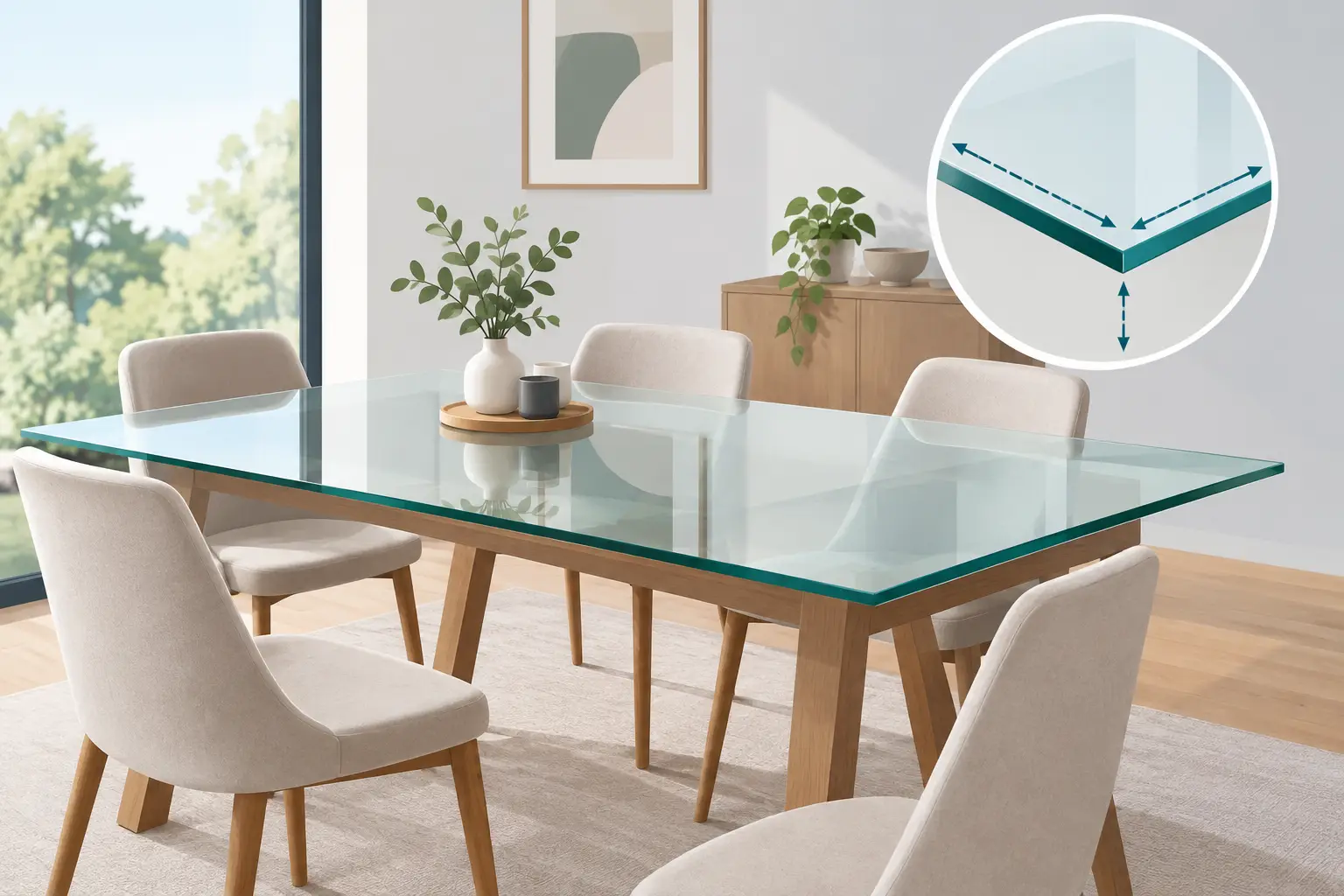
A table can be the centre of a room, but a poorly fitting glass top is quickly noticed. Corners overhang, gaps collect dust and an off-square edge can make even a well-made piece of furniture look unfinished. Made to measure glass table tops give you a properly tailored surface, whether you are protecting a treasured timber table, finishing a new base or updating a desk, coffee table or dining table.
The right specification is about more than length and width. Glass thickness, safety treatment, edge finish and the way the top is supported all affect how it looks and performs day to day. Getting these details right from the start helps the finished top feel like part of the furniture, rather than an afterthought.
A standard glass panel may suit a straightforward, rectangular table, but furniture rarely stays that simple. Older dining tables can have subtly uneven sides; console tables may be narrow; and occasional tables often have curved, clipped or rounded corners. A made-to-measure top follows the actual shape of your table rather than asking you to compromise around a stock size.
A glass top also protects the surface below from everyday wear. On a timber dining table, it can reduce the risk of marks from plates, spills, candles and craft materials while allowing the grain and character of the wood to remain visible. On painted furniture, it provides a durable, wipe-clean surface without hiding the colour. It can also bring a more refined finish to a metal, stone or painted base.
There is a practical balance to consider. Glass will show fingerprints and dust more readily than a textured timber surface, especially in strong sunlight. For many households, however, the ease of cleaning is a fair trade-off. A soft cloth and suitable glass cleaner are usually all that is needed to keep it looking clear.
The best glass choice depends on the table's purpose. A small side table used for a lamp has different demands from a family dining table, a home-office desk or a large boardroom table. Think about how often the surface will be used, what sits on it and who uses the space.
For tables in busy family homes, toughened safety glass is often the sensible choice. It is heat-treated to be much stronger than ordinary annealed glass and, if broken, is designed to fragment into small, less hazardous pieces rather than large sharp shards. This is particularly worth considering for dining tables, desks and furniture near children or pets.
Thickness should suit both the size of the panel and the support beneath it. A smaller, fully supported glass top may need less thickness than a large top that spans a frame or sits on a limited number of contact points. Thicker glass can feel more substantial and reduce flex, but it also adds weight. If the table needs to be moved often, or the base is delicate, that additional weight matters.
Heat is another consideration. Toughened glass is better suited to the occasional hot serving dish than standard glass, but it is still wise to use mats or trivets. Sudden, extreme temperature changes can put stress on any glass surface.
Clear glass is the most popular option because it protects the table while keeping the original material visible. It works especially well over oak, walnut, painted finishes and patterned wallpaper beneath a desk surface.
Tinted glass can create a more considered look. Grey or bronze tones soften the contrast of a bright room and can sit beautifully with darker joinery, black metalwork or antique-style furniture. If you want a table top that becomes part of the design rather than disappearing into it, coloured or antique-effect glass may be worth discussing. The amount of light in the room, and the colour of the base below, will influence the final appearance.
Accurate measuring is the difference between a glass top that looks intentional and one that feels awkward. Measure the table in several places, not just once. Timber furniture can vary slightly from end to end, and older pieces are not always perfectly square.
For a rectangular or square table, record the longest length and width, then check both diagonals. If the diagonals differ, the table may be out of square. That does not rule out a glass top, but it is a reason to provide careful measurements or ask for advice before production.
Decide whether you want the glass flush with the table edge, set in slightly, or allowed a small overhang. A flush fit gives a neat, built-in appearance but demands particularly accurate sizing. Setting the glass in by a few millimetres can be more forgiving on a table with irregular edges and may reduce the chance of catching the glass as people pass by.
For round, oval, kidney-shaped or curved furniture, a template is often the safest route. Templates are also useful where a top needs cut-outs for cable grommets, parasol holes, fittings or unusual corners. Never rely on a rough sketch for complex shapes. Once toughened glass has been processed, it cannot be cut down, drilled or reshaped afterwards.
The edge is the part you see and touch most, so it deserves attention. A polished edge has a smooth, finished appearance and is a popular choice for exposed table tops. It is comfortable to run a hand along and gives the panel a clean, quality look.
Arrissed edges, where the sharp edge is lightly removed, can be suitable where the glass is fitted into a frame or where the edge is less visible. For most freestanding furniture, a polished edge is usually the better visual choice.
Corner treatment should follow the table and the room. Small radius corners can soften a contemporary square top, while larger rounded corners are practical in tight walkways and family spaces. If your table has shaped corners, make sure these are included in the measurement or template rather than assuming a standard radius will match.
Glass needs even, stable support. A top laid over a solid table surface is relatively straightforward, provided the surface is clean and level. Small clear pads can prevent movement, protect the furniture and allow air to circulate between the glass and the surface below.
Open-frame bases need more thought. The frame must support the glass at the right points without creating pressure spots, and the chosen thickness must be appropriate for the span. A large panel sitting on only four small supports may require a different specification from a panel resting on a continuous perimeter frame.
Avoid placing glass directly onto sharp metal corners, uneven screw heads or damaged supports. These can concentrate force in one small area and increase the risk of damage. If you are pairing glass with a newly made joinery or metalwork base, share the dimensions and support layout before the glass is made.
For unusual furniture, a conversation before ordering can save time and uncertainty. Yorkshire Glass manufactures bespoke glass in its Leeds workshop, so customers can discuss dimensions, shapes, edge finishes and safety requirements with people who understand the fabrication process. This is useful for homeowners protecting a one-off family table, as well as joiners, designers and installers working to a detailed brief.
Bringing clear measurements, photographs and a simple sketch to a showroom appointment can make the process quicker. For larger or more complicated pieces, professional measuring and delivery support may offer extra reassurance, particularly where access, weight or awkward shapes are involved.
Use a clean microfibre cloth and a non-abrasive glass cleaner for routine care. Wipe up spills promptly, especially around the edges where liquid can sit between the glass and the table below. Avoid scourers, gritty creams and dragging heavy ceramic objects across the surface.
If the glass sits on pads, check them occasionally. Replacing a worn or missing pad is a small job that helps keep the top level and prevents rubbing. For tables that are moved frequently, lift the glass rather than sliding it across the base.
A well-specified glass top should make daily life easier while letting the furniture beneath it do the talking. If you are unsure about thickness, shape or the best way to measure a non-standard table, take a few photographs, note the key dimensions and ask for practical advice before the glass is cut.