
Leeds Glass Suppliers. Call our team on
Get A Fast Quote
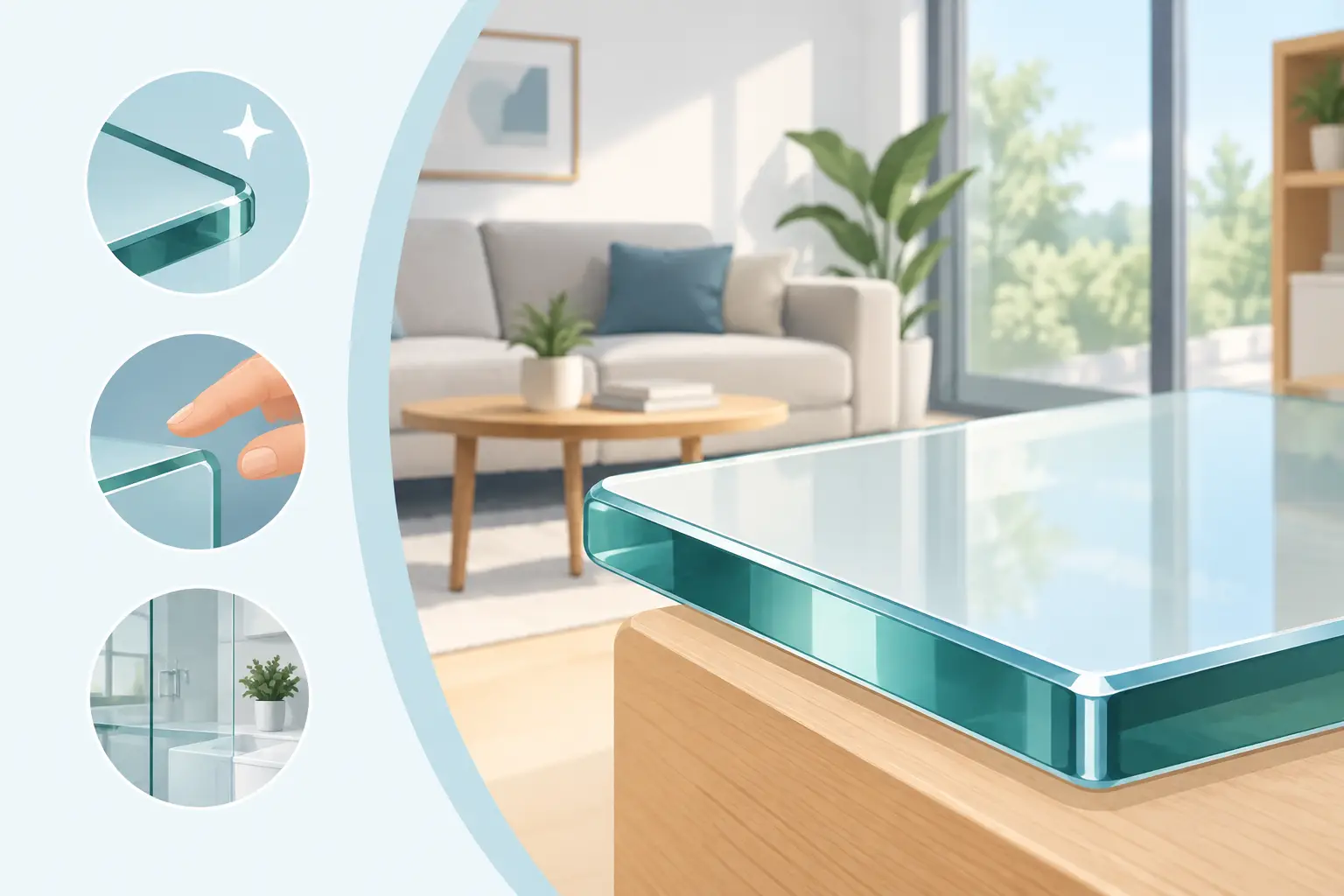
A beautifully cut piece of glass can still look unfinished if the edge has been overlooked. Glass edge polishing gives exposed glass a smooth, clear and carefully finished appearance, while also making it more comfortable and practical to handle. For splashbacks, shower screens, shelves, table tops and mirrors, it is often one of the details that separates a made-to-measure result from a standard-looking panel.
The right edge finish depends on where the glass will sit, how it will be used and whether its edges will be visible. A kitchen splashback fitted between units may only show a small perimeter, while a frameless shower screen or floating glass shelf puts its edges fully on display. Getting this decision right early helps the glass look considered, fit properly and perform as intended.
When glass is cut, its edge is sharp and can show tiny chips or roughness from the cutting process. Edge polishing removes that roughness by carefully grinding and polishing the glass until the edge is smooth, even and visually clean.
A polished edge is not simply about appearance. It makes the glass safer to touch during fitting and day-to-day use, and reduces the chance of minor chips developing at a vulnerable exposed edge. It is particularly worthwhile where people may regularly touch the glass, such as around a shower, on a table top or along the front of a shelf.
The finish should look clear rather than cloudy, with straight lines on square panels and a consistent result around shaped glass. This requires accurate cutting before the panel reaches the polishing stage. On bespoke work, good edge finishing starts with good measurements and a clear understanding of every cut-out, corner and fixing point.
Polished edges are usually specified whenever an edge will remain visible after installation. A frameless glass balustrade, for example, needs a neat finish because the edge is part of the finished design. The same applies to glass shelving, cabinet inserts, table tops and protective glass laid over furniture.
In bathrooms, exposed polished edges create the crisp, minimal look associated with frameless shower screens. They also make cleaning easier, as there is no rough edge for residue to catch around. For mirrors, a polished edge can provide a simple contemporary finish when the mirror is being fitted without a frame.
Kitchen splashbacks are slightly different. Their outer edges may be hidden behind wall units, worktops or trim, but any visible ends, returns or cut-outs should still be properly finished. A polished exposed end beside a doorway or open shelf looks far better than a raw cut edge and feels safer in a busy family kitchen.
For trade and commercial projects, polished edges are commonly needed on reception screens, display panels, partition glass and furniture components. Here, consistency matters just as much as the individual finish. Panels that meet at corners or run alongside other materials need clean, matching edges to keep the whole installation looking precise.
Not every piece of glass requires the same treatment. The best choice comes down to the design, the glass thickness and how much of the edge is on show.
A flat polished edge is the most common choice for exposed straight edges. The edge is ground square and polished clear, producing a sleek, modern finish. It suits shelves, shower screens, balustrades, table tops, splashback ends and many mirror applications.
This is generally the finish people mean when they ask for polished glass. It works well with contemporary interiors because it is neat without drawing too much attention to itself.
A pencil polish rounds the outer corner of the glass, creating a softer profile. It is often chosen for table tops, shelving and furniture glass, where hands may frequently pass over the edge. The rounded profile is comfortable and can feel less severe than a square flat polish.
It is a practical choice, although it produces a different visual effect. If you are matching a very crisp architectural scheme, a flat polish may be more suitable. If comfort and a gentler profile are priorities, pencil polishing is often worth considering.
An arrissed edge has the sharpness removed but is not polished to a clear decorative finish. It is a sensible option where the edge will be concealed in a frame, channel or wall fitting. It is generally more economical than a fully polished edge, but it is not intended for prominent exposed areas.
This is a good example of why the visible detail matters. Paying for a polished edge that will be completely hidden is not always necessary. Equally, specifying only an arrissed edge on a visible shelf or screen can leave the finished job looking incomplete.
A bevel is an angled polished border, most often used on mirrors and decorative glass. It catches the light and creates a traditional, more decorative look. Bevelled mirrors can work particularly well in bedrooms, hallways and classic bathroom schemes, but they are less commonly used where a clean, minimal style is wanted.
Glass edge polishing does not make ordinary glass into safety glass. Where a panel is used in a location governed by safety requirements or exposed to impact risk, the glass type must be selected correctly from the outset. Toughened safety glass is commonly used for shower screens, balustrades, glass doors and many table tops, depending on the application and specification.
The production order matters. Glass is cut to size, drilled and shaped, then edges are finished before it is toughened. Once toughened, glass cannot be cut, drilled or altered. A late change to a hinge position, socket cut-out or notch may mean a new panel is needed.
That is why accurate site measurement is so valuable on non-standard work. Walls are not always plumb, alcoves can taper and existing joinery may not be perfectly square. Taking the time to check the opening, fittings and tolerances before manufacture can prevent delays and help ensure the finished glass sits exactly as it should.
Before ordering bespoke glass, it helps to decide which edges will be exposed, whether the panel needs to be toughened and how it will be fixed. The thickness of the glass, the shape of the corners and the position of any holes or cut-outs should also be confirmed at this stage.
Think about the material next to the glass too. A polished edge can look very different alongside warm timber, matt black metal, stone or high-gloss cabinetry. Clear glass creates a light, understated effect, while coloured, tinted or antique mirror glass can turn the same edge detail into part of a stronger design statement.
Cleaning and maintenance deserve consideration as well. Polished edges need no special treatment, but they should be cleaned with a soft cloth and suitable glass cleaner. Avoid knocking exposed corners with hard objects, particularly on shelves and table tops. Although toughened glass is strong, no glass is completely immune to accidental damage.
A standard rectangular panel is straightforward, but many projects are not standard. Sloping ceilings, chimney breasts, sockets, uneven walls, shaped shower trays and unusual fixing arrangements all affect how glass should be made and finished. This is where speaking to a local glass specialist before ordering can save time and avoid costly assumptions.
At Yorkshire Glass, panels are manufactured in our Leeds workshop, allowing the team to work closely with homeowners, installers and trade customers on sizes, shapes and edge details. Bringing in measurements, photographs or a simple sketch is often enough to start a useful conversation, especially when you are unsure which finish is appropriate.
A polished edge may be a small feature, but it is one you see and feel every day. Choose it where the glass is on show, match it to the way the panel will be used, and allow for accurate measuring before manufacture. That attention to the final few millimetres is what makes bespoke glass feel properly made for the space.